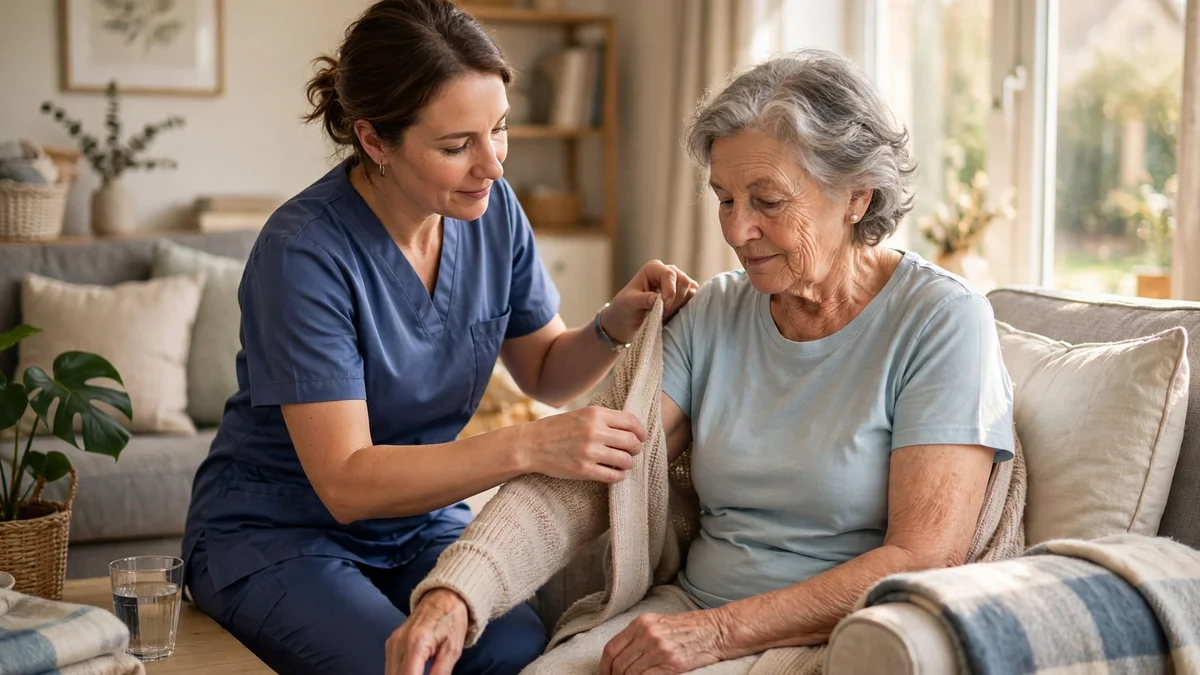

Personal care services are hands-on help with the everyday tasks of looking after yourself at home, from bathing and dressing to grooming, eating and moving safely around the house. The central question most families ask is simple: what exactly do personal care services cover, and when are they the right kind of help? They cover non-medical, day-to-day support delivered in the person’s own home, usually by a trained care worker, and they are designed for anyone who finds daily routines difficult, whether through age, illness, disability or recovery from an operation.
Unlike a hospital stay or a visit from a nurse, personal care is about living well at home rather than treating a condition. The support is practical and regular: the same carer often visits at set times each day, helping with the morning routine, preparing a meal, or making sure someone can get to bed safely at night.
Key takeaways
- Personal care services cover bathing, dressing, grooming, toileting and mobility help at home.
- They are non-medical: carers support daily living rather than giving clinical treatment.
- Care is usually provided by trained care workers, sometimes called home carers or personal care assistants.
- Visits can run from half an hour a few times a week to several visits a day, or live-in care.
- Families usually arrange care directly with an agency, or through a local authority assessment.
- Good care starts with a written care plan that spells out exactly what help is wanted, and when.
What personal care services actually include
At its heart, personal care is help with the tasks most of us do without thinking. Bathing and showering come first for many people: a carer can help someone get in and out of the bath safely, wash their hair, and dry off afterwards. Dressing is another common task, including help with buttons, zips, stockings and shoes, and choosing clothes that suit the weather and the day ahead. Grooming covers shaving, brushing teeth, combing hair and cutting nails, the small routines that keep a person feeling like themselves.
Toileting support is a sensitive part of the job, and a good carer handles it with discretion and respect. That can mean help getting to the bathroom, managing incontinence products, or keeping the bathroom clean and safe. Mobility help is closely linked: steadying someone as they stand, helping them move from bed to chair, supporting them on the stairs, or walking with them around the house and garden. Carers also help with eating and drinking, from preparing simple meals to sitting with someone while they eat, and making sure they drink enough through the day.
Many care workers also take on light household tasks tied to the person’s comfort, such as changing the bed or doing laundry, though the boundary varies by provider, so ask what is included before care starts. Personal care does not include clinical work: carers do not give injections or change dressings, although they can remind someone to take their tablets.
Who provides personal care
Personal care is usually delivered by trained care workers employed by a home care agency, or by independent personal care assistants hired directly by the family. Agency carers are recruited, trained and supervised by the agency, which also arranges cover when a regular carer is ill or on holiday. Independent carers are chosen and managed by the family themselves, which can mean more control over who visits and when, but also more responsibility for checks, contracts and cover.
Training varies, but a good care worker will have completed basic training in moving and handling, infection control, food hygiene and safeguarding, and will usually work towards a recognised care qualification. Many agencies also provide specialist training for conditions such as dementia, Parkinson’s disease or stroke recovery, so a carer arriving to support someone with a particular condition should know what to expect. Families can always ask what training a carer has had, and a reputable provider will answer plainly.
It is also common for family members to provide much of the personal care themselves, with a professional carer stepping in for the hardest tasks, or to give the family a break. This mix, often called shared care, works best when everyone is clear about who does what.
How personal care differs from medical home care
The line between personal care and medical home care matters, because the two are arranged, funded and regulated differently in many places. Personal care is non-clinical support with daily living: washing, dressing, eating and moving around. Medical home care, often called home health care or nursing care, is clinical: wound care, injections, catheter care, monitoring vital signs and managing complex medication regimes, delivered by registered nurses or therapists.
Many people need both, and the two often work side by side. A nurse might visit once a week to check a wound and review medication, while a personal carer visits every morning to help with washing and breakfast. Keeping the distinction clear helps families ask for the right service from the right provider, and avoids the frustration of a carer arriving who is not qualified to do the clinical task that is actually needed.
There is also a difference from domestic help or companionship services. A cleaner tidies the house; a companion offers conversation and company. Personal care is more intimate than either, because it involves the body, dignity and safety, which is why care workers are trained, checked and supervised.

Personal care compared with other kinds of help
Families often weigh several options at once, and the differences are easier to see side by side. The table below sets out the main kinds of support available at home.
| Type of help | What it covers | Who provides it |
|---|---|---|
| Personal care | Bathing, dressing, grooming, toileting, mobility | Trained care worker or personal assistant |
| Medical home care | Wound care, injections, medication management | Registered nurse or therapist |
| Domestic help | Cleaning, laundry, shopping, cooking | Home helper or cleaner |
| Companionship | Conversation, outings, company at home | Companion or befriender |
| Live-in care | Round-the-clock personal care in the home | Live-in carer |
| Respite care | Short-term cover while family carers rest | Agency carer or care home |
How families arrange personal care
Arranging care usually starts with an honest conversation about what is becoming difficult. Write down the tasks that take too long or cause worry: getting out of bed, showering, cooking a hot meal, remembering to drink. That list becomes the basis for a care assessment, carried out by a local authority, a health service, or the care agency itself.
From the assessment comes a care plan: a written document that sets out the tasks, the times of visits, the carer or carers who will attend, and any preferences about how things are done. A good plan is specific rather than vague. It says “help with a shower on Mondays, Wednesdays and Fridays at 9am” rather than “help with washing”. Families should read the plan before care starts, and ask for changes whenever needs shift, because care that is not reviewed tends to drift away from what the person actually wants.
Choosing a provider takes a little homework. Ask how carers are recruited and checked, what training they receive, and what happens when a regular carer is unavailable. A short trial period will show whether the carer and the client get on, and it is reasonable to ask for a different carer if the match is not right.
Paying for personal care
How personal care is paid for depends a great deal on where you live, and the rules are worth checking locally. In some places, local authorities or health services fund part or all of the cost after an assessment of needs and finances. In others, families pay privately, to an agency or directly to an independent carer.
Costs are usually charged by the hour, with a minimum visit length, and rates vary by region, agency and time of day. Evening, weekend and bank holiday visits often cost more, and live-in care is usually priced as a weekly rate. Get written quotes from more than one provider, and check what is included.
Your personal care services checklist
Work through this list before care starts, and keep it handy for the first review.
- Write down the daily tasks that are becoming difficult, and when they happen.
- Ask for a care assessment from the local authority, health service or agency.
- Read the written care plan and check that times and tasks match what you asked for.
- Ask how carers are recruited, checked and trained before they visit.
- Confirm what happens when the regular carer is ill or on holiday.
- Get written quotes from more than one provider and compare what is included.
- Check the contract for notice periods, missed-visit rules and complaints handling.
- Agree how the family and the carer will share updates, such as a care diary.
- Plan a short trial period, then review the match between carer and client.
- Keep a record of visits so billing can be checked against care delivered.
Frequently asked questions
What is the difference between personal care and home care?
Home care is the broad term for any support delivered at home, and personal care is one part of it: the hands-on help with bathing, dressing, grooming, toileting and moving around. Domestic help, companionship and nursing care are the other parts, arranged and staffed differently.
Who needs personal care services?
Anyone who finds everyday self-care difficult can benefit, including older people, people living with disability or long-term illness, and people recovering from surgery. Care can be short-term, while someone regains strength, or long-term.
Do personal carers give medication?
Personal carers do not usually administer medication or adjust doses, since that is clinical work. They can remind someone to take their tablets and pass any concern on to the family or to a nurse.
How long does a personal care visit last?
Visits commonly last between half an hour and an hour, depending on the care plan. Some people need only a short morning visit, others need several visits a day, and some choose live-in care.
Can I choose my own carer?
Yes, in most cases. Agencies usually try to match a carer to the client, and families can ask for a change if it does not work. People who hire an independent assistant choose the person themselves.
Is personal care the same as nursing care?
No. Nursing care is clinical and delivered by registered nurses, covering tasks such as wound care and injections. Personal care is non-medical support with daily living, and the two often run alongside each other.
The bottom line
Personal care services are, at their simplest, a practical way to keep daily life dignified and manageable at home: help with bathing, dressing, grooming and moving around, delivered by a trained carer who knows the person and the plan. Start with an honest list of what is difficult, get a proper assessment, and choose a provider who treats the care plan as a living document. For more on keeping a home comfortable, see our guide to how to wash a wool blanket, our advice on eating healthier with cooked vegetables, and our trending home workouts for gentle movement that supports independence.
This article is general information only, not medical or legal advice. Care arrangements, funding rules and regulations vary by location, so check local guidance or speak to a qualified professional before making decisions about care.