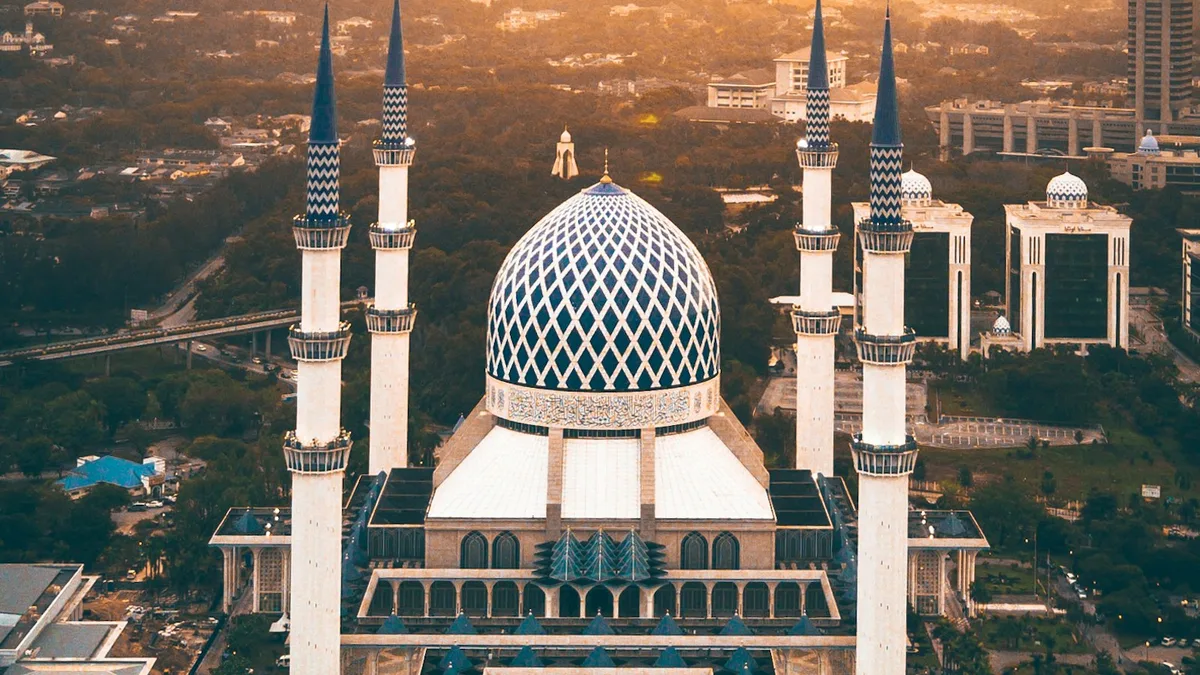

Masjid near me is the search people run when they need a mosque nearby, whether for daily prayers, Friday congregation, a community event, or a first visit to learn about Islam, and the quickest way to find one is a map search for “mosque” or “masjid” near your location, checked against the mosque’s own website or noticeboard for prayer times. A masjid is simply the Arabic word for a mosque: a place of worship for Muslims, and often a community centre as well.
This guide explains what a masjid is, how to find one near you, what to expect when you visit, how prayer times work, and what etiquette to follow as a guest.
Key takeaways
- Masjid is the Arabic word for mosque, a place where Muslims gather to pray and meet as a community.
- A map search for “mosque” or “masjid” near you is the fastest way to find one, followed by a check of its own prayer timetable.
- Muslims pray five times a day, and the Friday midday prayer, Jumu’ah, is the main weekly congregation.
- Visitors remove their shoes before entering the prayer hall and dress modestly.
- Most mosques welcome respectful visitors, and many run open days, tours and community events.
- Prayer times change daily with the sun, so always check the mosque’s own timetable rather than guessing.
What a masjid is
A masjid is a place of worship for Muslims. The word comes from Arabic and means a place of prostration, referring to the act of bowing in prayer. In English, masjid and mosque mean the same thing, and both words are used by Muslim communities around the world. The building is a place for the five daily prayers, for the Friday congregation, and for the religious festivals of Eid, as well as for teaching, weddings, funerals and community gatherings.
Most mosques share a few recognisable features. A dome or a minaret, the tall tower from which the call to prayer is traditionally given, marks the building from outside. Inside, the prayer hall is a large open space with carpet, often patterned with lines or arches to show where worshippers stand in rows. The mihrab, a niche in the wall, shows the direction of prayer, which faces the Kaaba in Makkah. There are usually washing facilities, for the ritual washing known as wudu that is done before prayer, and separate prayer areas for men and women.
Mosques differ in size and style. A small neighbourhood mosque may be a converted house or shop with a single prayer room, while a large city mosque may have a grand hall, classrooms, a library and a community kitchen. The architecture varies by country and tradition, from the Ottoman domes of Turkey to the modern glass and concrete of new British and American mosques. What they share is their purpose: a place to pray together and to belong.
How to find a masjid near you
A map search is the fastest start. Searching “mosque near me” or “masjid near me” in a maps app shows the nearest mosques with their locations, opening hours where listed, and often photos and reviews. Check the results against the mosque’s own website or social media page, since a map listing can be out of date, and a mosque that has moved will still appear at its old address in some listings.
Online mosque directories are the next step. Several websites list mosques by town and country, with prayer timetables and contact details, and local Islamic councils often keep lists of the mosques in their area. A directory is useful when you are travelling, since it covers towns where you do not know the streets. Asking at a local Muslim community centre, an Islamic shop, or a halal restaurant is another reliable way to find the nearest mosque, and people will usually point you to the one that suits your need, whether that is the closest, the largest, or the one with Friday prayers in your language.
When you find a mosque, check its prayer timetable before you go. Prayer times are set by the position of the sun and change a little every day, so a mosque publishes its own timetable, usually on its website, on a noticeboard, or on a printed card. The five daily prayers are Fajr before dawn, Dhuhr at midday, Asr in the afternoon, Maghrib just after sunset, and Isha at night. The Friday midday prayer, Jumu’ah, replaces Dhuhr on Fridays and includes a sermon, so the mosque is at its busiest then.
What to expect on a first visit
Expect a calm, quiet space. Worshippers arrive, wash, and take their place in the prayer hall. Shoes are left at the entrance or in racks, since the prayer carpet is kept clean. Mobile phones are silenced, and conversation in the hall is kept low, especially during prayer. If you arrive during a prayer, wait quietly at the back until it ends, then introduce yourself to someone nearby.
Dress modestly. Men and women both cover their shoulders and legs, and women cover their hair inside the prayer hall in most mosques; some mosques keep spare headscarves at the entrance for visitors. If you are unsure, ask at the door: mosque volunteers are used to guiding first-time visitors, and a polite question is always welcome. Women usually pray in a separate area or balcony, and a visitor will be shown to the right place.
Non-Muslim visitors are welcome in most mosques outside prayer times, and many mosques run open days, guided tours and interfaith events. If you are visiting to learn, the best time is often between prayers, when someone is free to talk. If you are visiting to pray, arrive a few minutes early, follow the rows, and copy what others do if you are new to the movements. Nobody expects a first-time visitor to know everything.
Mosque services and community life
A mosque is more than a prayer hall. Most run classes for children and adults, teaching the Quran, Arabic and Islamic studies. Many offer marriage services, funeral arrangements, and help for new Muslims. Larger mosques run food banks, youth clubs, sports activities, health events and charity collections, and they often open their doors for neighbourhood events, from open days to charity fundraisers.
Ramadan changes the rhythm of the mosque. During the month of fasting, the mosque fills for the evening Tarawih prayers, and many mosques serve the fast-breaking meal, iftar, every evening, open to all. The two Eids, Eid al-Fitr at the end of Ramadan and Eid al-Adha during the pilgrimage season, bring the largest congregations of the year, with early morning prayers and celebrations that spill out into the streets. If you are visiting during Ramadan or Eid, arrive early and expect crowds.

Ways to find a mosque compared
Different ways of searching suit different needs. The table below compares them.
| Method | Best for | What you get | Watch for |
|---|---|---|---|
| Maps app search | Nearest mosque right now | Location, directions, photos, reviews | Listings can be out of date |
| Mosque directory site | Travelling to a new town | Lists by town, timetables, contacts | Some entries are incomplete |
| Mosque’s own website | Prayer times and events | Accurate timetable, announcements | Not every mosque has one |
| Local Islamic council | Trusted local list | Verified mosques in the area | May only cover one city |
| Asking locally | Finding the right mosque | Personal recommendation | Depends on who you ask |
The practical approach is to use a map search to find the nearest mosque, then confirm the details on the mosque’s own website or by asking someone there. For prayer times, the mosque’s own timetable is the authority; a general prayer-time app gives the calculated times, but the mosque may follow a slightly different timetable, and the congregation prays at the mosque’s stated time.
Etiquette for visitors
Respect is the only rule that matters, and it is mostly common sense. Remove your shoes before entering the prayer hall. Dress modestly and, for women, cover your hair in the hall. Keep your voice low and your phone silent. Do not walk in front of someone who is praying. Do not take photographs during prayer, and ask before photographing people at any time.
If you are offered food or drink, accept it graciously: hospitality is a valued part of mosque life, and refusing can seem rude. If you have questions about Islam, ask them politely and at a suitable moment, after prayer rather than during it. Most mosques have someone whose job includes welcoming visitors and answering questions, and a genuine question is treated as a compliment, not an intrusion.
Your masjid near me checklist
- Search a maps app for “mosque” or “masjid” near you.
- Check the mosque’s own website or noticeboard for its timetable.
- Note the five daily prayer times and the Friday Jumu’ah time.
- Plan to arrive a few minutes before the prayer you want to join.
- Remove your shoes at the entrance and silence your phone.
- Dress modestly and cover your hair in the hall if asked.
- Wait quietly at the back if you arrive during a prayer.
- Ask a volunteer if you are unsure where to go.
- Do not photograph people praying without asking first.
- Check the mosque’s events page for open days and community activities.
Frequently asked questions
What is the difference between a masjid and a mosque?
There is none. Masjid is the Arabic word for mosque, and both words mean a place where Muslims gather to pray. English speakers use “mosque” more often, while “masjid” is common in Muslim communities and in Arabic-speaking countries.
Can non-Muslims visit a mosque?
Yes, in most cases. Most mosques welcome respectful visitors, and many run open days and guided tours. Visit between prayers if you want to look around and talk, dress modestly, remove your shoes in the prayer hall, and ask before taking photographs.
How do I find prayer times for a mosque near me?
Check the mosque’s own timetable on its website, noticeboard or printed card. Prayer times are set by the sun and change daily, and each mosque follows its own timetable, so the mosque’s stated times are the ones the congregation uses.
What time is the Friday prayer?
The Friday prayer, Jumu’ah, is held around midday, replacing the Dhuhr prayer, and includes a sermon before the prayer itself. The exact time varies by mosque and by season, so check the mosque’s timetable. Mosques are at their busiest on Fridays.
Do I need to book to visit a mosque?
Usually not for prayer: you can simply arrive and join the congregation. For a tour, a school visit, or a large group, it is polite to contact the mosque in advance so someone can welcome you and show you around.
What should women wear to visit a mosque?
Modest dress covering the shoulders, arms and legs, with hair covered inside the prayer hall. Many mosques keep spare headscarves at the entrance for visitors, and volunteers will show you to the women’s prayer area.
The bottom line
Finding a masjid near me starts with a map search and ends with the mosque’s own timetable: the nearest mosque is easy to find, and the prayer times, the Friday congregation and the community events are all listed where the mosque itself publishes them. Go with modest dress, quiet shoes-off respect, and a willingness to ask, and you will be welcomed. If you are planning a calm day around a visit, our guide to the best water bottles covers staying hydrated on the way, our guide to the best dog breeds for families is a gentle read for later, and our guide to card shows near me is another local search worth doing with the same care.