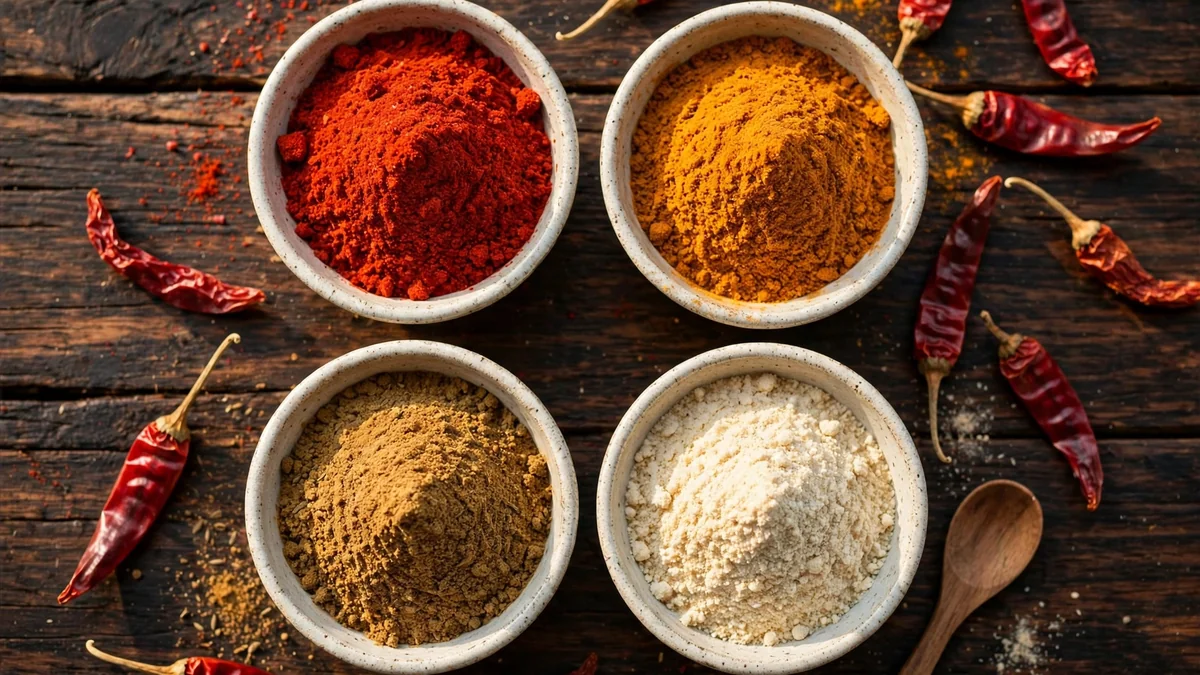

This chili seasoning recipe makes a bold, warm blend from spices you probably already have, and it takes about five minutes from start to finish. You mix chili powder, cumin, paprika, garlic and a handful of other ground spices, and what comes out is fresher and more flexible than any packet, because you control the heat, the salt and the smokiness. One batch seasons a big pot of chilli, and the rest keeps in a jar for months.
Key takeaways
- This chili seasoning recipe uses nine ground spices, with chili powder and cumin doing most of the work.
- The base is three tablespoons of chili powder with two teaspoons each of cumin and paprika.
- You can make the blend in five minutes with a bowl, a spoon and a jar.
- Cayenne controls the heat, smoked paprika adds depth, and a pinch of sugar rounds the edges.
- One batch seasons a large pot of chilli, and it also works on beans, roast vegetables and eggs.
- Store the blend in a sealed jar away from heat and light, and use it within six months.
What goes into a good chili seasoning
A good chili seasoning is a balance, not a single flavour. Chili powder gives it body and gentle heat, cumin gives it an earthy warmth that people recognise as chilli even before they taste it, and paprika adds colour and soft sweetness. Garlic and onion powder fill in the savoury background, oregano adds a herbal note, and salt and black pepper tie it all together.
It helps to know what chili powder actually is, because the name causes confusion. The chili powder page on Wikipedia explains that the spice sold as chili powder is itself a blend, usually built from ground dried chillies with cumin, oregano, garlic and salt already mixed in. Different brands vary a lot in heat and salt, so a recipe that is perfect with one jar can be flat or fiery with another. Treat the ratios below as a starting point, not a law, and adjust after the first batch.
The recipe: ratios that work
The table below is the heart of this chili seasoning recipe. It makes roughly a third of a cup of blend, enough for a large pot of chilli with some left over for the next one. The amounts are given in spoons rather than grams, because most people make this with the spice jars already in the cupboard, and a spoon is faster than a scale.
| Spice | Amount per batch | What it does | Swap |
|---|---|---|---|
| Chili powder | 3 tablespoons | Body, colour and gentle heat | Ancho chili powder |
| Ground cumin | 2 teaspoons | Earthy warmth, the classic chilli note | None |
| Paprika | 2 teaspoons | Colour and soft sweetness | Smoked paprika |
| Garlic powder | 1 teaspoon | Savoury background | Garlic granules |
| Onion powder | 1 teaspoon | Mild sweetness and depth | Onion granules |
| Dried oregano | 1 teaspoon | Herbal lift | Mexican oregano |
| Salt | 1 teaspoon | Brings the flavours together | Leave out |
| Black pepper | Half a teaspoon | Warmth and a little bite | A pinch of cayenne |
| Cayenne pepper | Quarter teaspoon | Heat, adjustable to taste | Leave out |

How to make it, step by step
Making the blend is simple, but two small habits make a real difference. Measure with the same spoons every time, so the blend tastes the same from batch to batch, and mix it well: ground spices clump, and an unmixed jar gives you a spoonful of cumin one day and a spoonful of salt the next. Five minutes of care now saves a pot of chilli later.
- Measure all nine spices into a small bowl, using level spoons.
- Stir with a fork for a full minute, breaking up any clumps.
- Tip the blend into a clean, dry jar with a tight lid.
- Label the jar with the name and the date you made it.
- Taste a pinch to check the heat and salt.
- Use three to four tablespoons per large pot of chilli.
If the blend tastes flat, it usually needs salt, not heat. If it tastes bitter, the chili powder may be old, or the pan may have been too hot when the spices were added: ground spices burn quickly, so add them to oil over a gentle heat and stir for no more than a minute before the tomatoes or beans go in. Measure carefully, taste as you go, and write down what you changed, as the guide to carne asada marinade shows for another spice-led recipe.
Making it your own: heat, smoke and sweetness
Once you have made the base blend, you can bend it in three directions. For more heat, raise the cayenne a quarter teaspoon at a time, or add a pinch of dried chilli flakes for a slower burn. For smoke, swap the sweet paprika for smoked paprika, which gives the blend a bonfire note that suits beans and slow-cooked beef. For sweetness, add half a teaspoon of brown sugar or a pinch of cocoa powder, both of which round off the edges without making the dish taste sweet.
The other direction is milder. Leave out the cayenne, use ancho chili powder instead of a hot blend, and let the cumin and paprika carry the flavour. Children and cautious eaters usually prefer this version, and you can always put a bottle of hot sauce on the table for the people who want more. A blend made for a family pot does not need to please everyone at full strength; it needs to be a base everyone can eat, with heat added at the table. That is one of the real advantages of making your own: the packet gives you one heat level, while your jar gives you as many as you like.
A short history of chili powder
Chili powder as a blend has a short, American history. The first commercial blends in the United States were created by D.C. Pendery and William Gebhardt for chili con carne. Gebhardt opened Miller’s Saloon in New Braunfels, Texas, and because chili peppers were only available seasonally, he imported ancho peppers from Mexico, ran them through a meat grinder three times, and made the first commercial chili powder in 1894.
The peppers behind the powder vary. Aleppo, ancho, cayenne, chipotle, chile de árbol, jalapeño, New Mexico, pasilla and piri piri are all used for chili powder, along with gochugaru from Korea and Kashmiri, which is bright red and mild. The variety decides how hot and how fruity the blend tastes. One spelling note: it is “chili” in American English and “chilli” in British English.
What to cook with it
Chilli con carne is the obvious use, and the blend was built for it: it is the primary flavour in American chili con carne, and it also turns up in Tex-Mex, Mexican, Indian, Thai and Chinese cooking, in soups, tacos, enchiladas, fajitas and curries. Stir it into a pot of beans with tomatoes and onions for a meat-free chilli that tastes as rich as the original. Rub it into chicken thighs or pork shoulder before roasting, where the paprika colours the skin and the cumin perfumes the kitchen. Toss roast sweet potatoes or cauliflower in oil and a spoonful of the blend before they go in the oven.
Even breakfast benefits: scrambled eggs with a pinch of chili seasoning, or a tin of baked beans warmed with a little of the blend, taste like a different meal. The blend also works as a finishing spice: a pinch over a bowl of soup, a sprinkle on popcorn, or a dusting on roast nuts, because the spices are already ground and cooked through by the heat of the food. Keep it away from dishes already heavily spiced in another direction, where it will fight the other flavours. The guide to Puerto Rican food covers a cuisine that seasons boldly too, and it is a good reminder that a confident hand with spices is a habit worth building.
Storing chili seasoning so it stays bold
Ground spices lose their flavour faster than whole ones, and light, heat and air speed it up. A jar left next to the cooker, in sunlight or with a loose lid will taste dull within weeks, while the same blend in a sealed jar in a cool, dark cupboard will stay bold for months. Six months is a sensible limit for a homemade blend, and if it smells faintly dusty rather than warm and rich, it is time to make a fresh batch.
Whole spices last longer, so some cooks keep the cumin and chilli flakes whole until needed, and grind them into the blend fresh. That is more work than most people want for a weeknight pot of chilli, but it is worth knowing if you cook with the blend often. Either way, keep the jar dry: a damp spoon introduces moisture, the spices clump, and the blend can spoil. Use a dry spoon, close the lid properly, and label the jar with the date. The chilli itself needs nothing more than bread, rice or a baked potato, though the guide to the best slow cooker is a useful companion for the pot it simmers in.
Your chili seasoning checklist
- Start with three tablespoons of chili powder and two teaspoons each of cumin and paprika.
- Add garlic, onion, oregano, salt, black pepper and a little cayenne to complete the blend.
- Measure with level spoons so every batch tastes the same.
- Stir for a full minute to break up clumps before jarring.
- Taste a pinch and adjust the heat and salt before cooking with it.
- Use three to four tablespoons per large pot of chilli, then adjust to taste.
- Store in a sealed jar in a cool, dark cupboard and use within six months.
- Keep the spoon dry and label the jar with the date you made it.
How much chili seasoning do I use per pot?
Use three to four tablespoons per large pot of chilli, added early so the spices cook into the dish. Taste near the end of cooking and add more if it needs it; it is easy to add spice and hard to take it away.
Is chili powder the same as chili seasoning?
No. Chili powder is itself a blend, usually made from ground dried chillies with cumin, oregano and garlic. Chili seasoning is a fuller blend that starts with chili powder and adds more spices, so it seasons a whole dish on its own.
Can I make chili seasoning without cayenne?
Yes. Leave the cayenne out for a mild blend that still tastes rich, thanks to the cumin and paprika. Anyone who wants more heat can add hot sauce at the table.
How long does homemade chili seasoning last?
About six months in a sealed jar in a cool, dark cupboard. After that it is still safe to eat, but the flavour fades, so make a fresh batch if it smells dusty rather than warm and rich.
What can I use instead of smoked paprika?
Use sweet paprika and add a tiny pinch of chipotle powder if you have it. The flavour will be less smoky but still warm and full, and the colour will be the same.
Can I use chili seasoning on vegetables?
Yes. Toss roast sweet potatoes, cauliflower or chickpeas in oil and a spoonful of the blend before cooking. It also works on beans, eggs, popcorn and roast nuts.
The bottom line
This chili seasoning recipe is a small jar with a big job: nine ground spices, mixed in five minutes, that turn a pot of beans or beef into a proper chilli. Start with the ratios in the table, taste the first batch, then make it your own, hotter, smokier or milder as you like. Keep it sealed, keep it dry, and use it within six months, and you will wonder why you ever bought the packet.