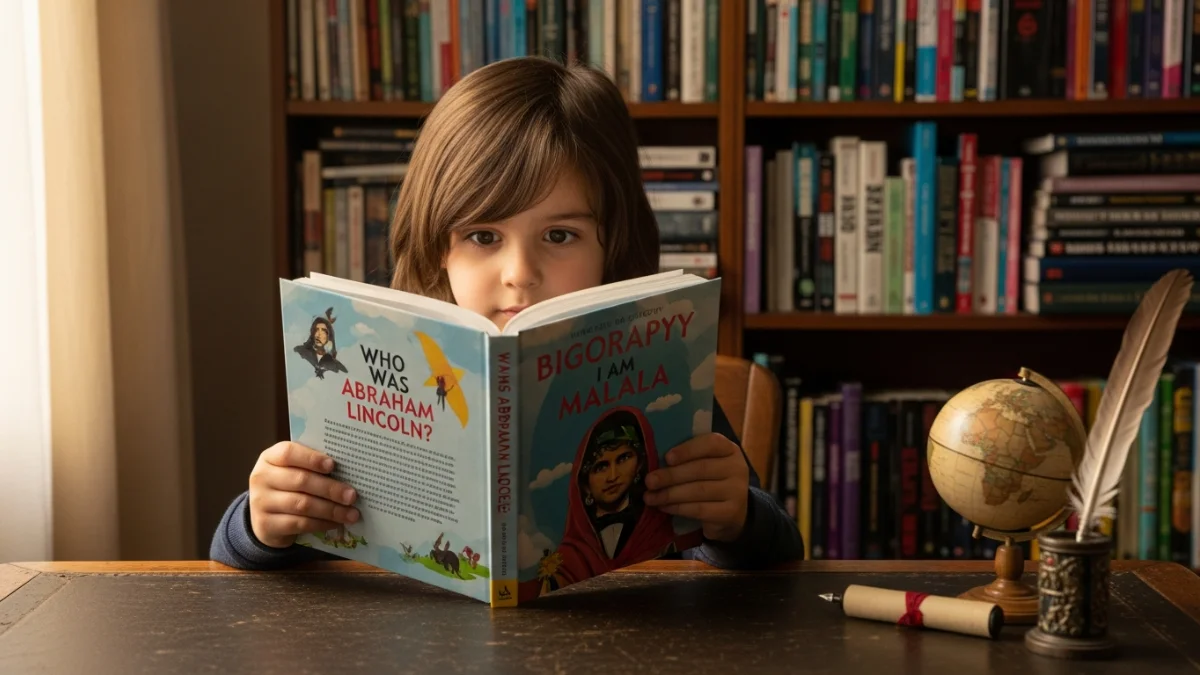
Biographies for kids are more than just stories they open doors to fascinating worlds and offer young readers a chance to discover the lives of some of history’s most remarkable figures. From artists and scientists to leaders and innovators, these books allow children to see the challenges and triumphs that shaped our world.
Whether they’re reading about a famous historical figure or a modern-day hero, kids gain inspiration and valuable life lessons that stay with them long after the last page. Moreover, they learn that greatness often comes from perseverance and hard work, values often found in those who achieve significant success.
How Biographies for Kids Help Child Development
Biographies for kids do much more than tell a story; they are recognized as powerful tools for emotional and intellectual growth during early childhood development. In fact, many children grow through the inspiring examples of courage, leadership, and determination that these books highlight.
Biographies for Kids in Building Critical Thinking
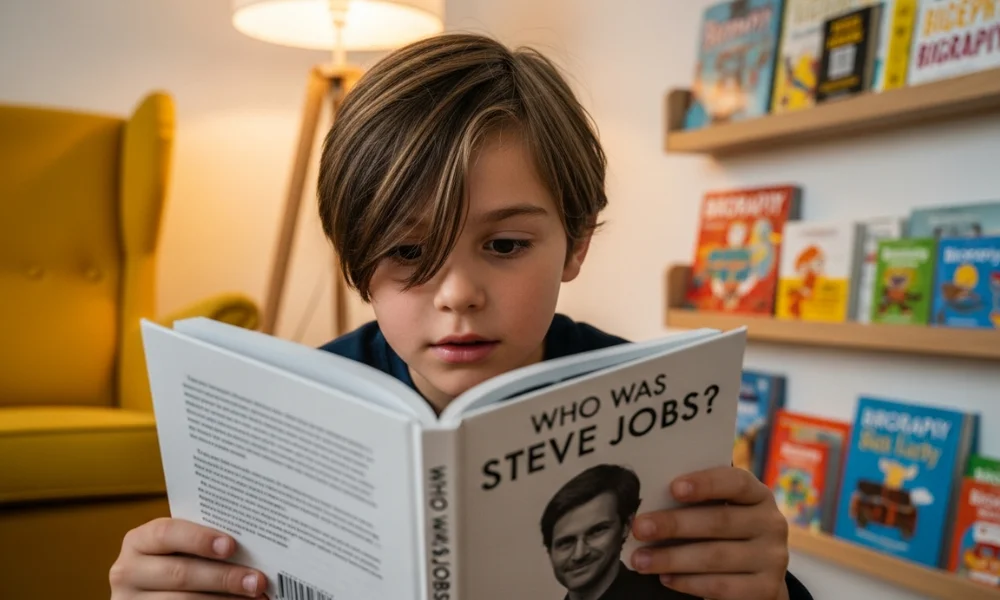
When kids dive into the stories of famous historical figures, they’re not just learning about the past they’re also honing their ability to think critically. For instance, reading biographies like Who Was Abraham Lincoln? helps children understand the difficult choices Lincoln had to make.
In addition, they begin to explore the broader implications of those decisions, sharpening their own problem-solving skills.
Fostering Emotional Growth
As kids read about the lives of others, they connect on an emotional level with the people they learn about. Whether it’s a leader like Martin Luther King Jr. or an artist like Frida Kahlo, these stories help children understand different perspectives and emotions.
This connection nurtures empathy and helps kids deal with their own emotional challenges. For example, by reading about Helen Keller’s struggles, children learn the power of resilience in the face of adversity.
Promoting Social Awareness
Reading biographies also exposes kids to diverse cultures and experiences. As a result, they develop a broader understanding of the world around them. Whether it’s learning about the resilience of Rosa Parks or the determination of Malala Yousafzai, kids gain a deeper appreciation for equality and social justice.
Thus, biographies help them develop a sense of responsibility toward their own communities and the world.
Age-Based Biographies for Kids with Learning Objectives
When choosing biographies for kids, age-appropriate content matters. By selecting books that match their age and interests, you can ensure that children stay engaged while gaining the right educational benefits.
For Early Readers (Ages 4–7)
For younger children, biographies should be simple and engaging. In particular, picture books that tell stories in a fun and colorful way are perfect for this age group. For example, educational biography books like The Story of Ruby Bridges or Who Was Abraham Lincoln? introduce kids to important historical figures while also teaching them valuable lessons about courage and kindness.
Additionally, these books help build vocabulary and comprehension skills.
For Elementary Readers (Ages 8–11)
As children get older, they can handle more detailed stories. Consequently, Biographies for this age group often delve deeper into the lives of famous figures, focusing on the challenges they faced and how they overcame them. Books like Who Was Steve Jobs? or The Story of Martin Luther King Jr. help children understand how individuals make an impact on society.
Moreover, these stories encourage critical thinking and inspire children to think about their own potential.
For Tweens and Teens (Ages 12+)
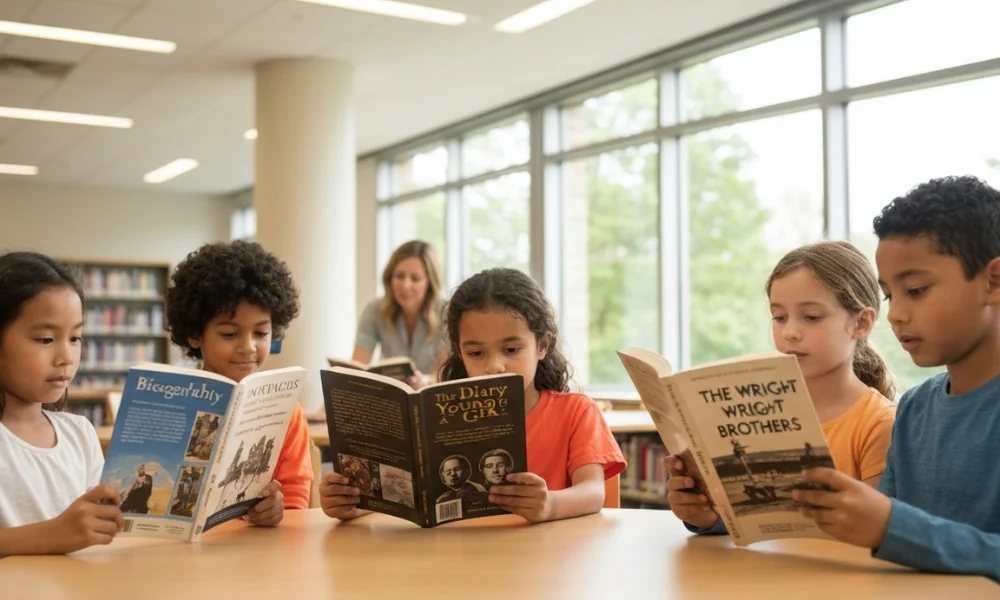
Older kids and teens are ready for more complex autobiographies that dive into broader themes such as conflict, innovation, and legacy. For Example, Books like The Diary of a Young Girl or I Am Malala offer more in-depth insights into the lives of people who changed the world.
These books, in particular, help older readers understand the significance of an individual’s legacy. Consequently, teens are encouraged to reflect on their own lives and ambitions.
Recommended Biographies by Theme
To help you choose the right biography for your child, we’ve categorized a few great books by theme. In doing so, these books cover various aspects of history and personal growth, therefore making it easier to find the right fit based on your child’s interests.
Leadership and Influence Biographies for Kids
-
Who Was Abraham Lincoln? by Janet Pascal
-
Who Was Rosa Parks? by Yona Zeldis McDonough
-
The Life of Nelson Mandela by Kadir Nelson
-
Who Was Eleanor Roosevelt? by Gare Thompson
Innovation and Discovery Biographies for Kids
-
The Wright Brothers by David McCullough
-
The Boy Who Loved Math: The Improbable Life of Paul Erdős by Deborah Heiligman
-
Who Was Steve Jobs? by Kirsten Anderson
-
Marie Curie: A Biography by Marilyn Bailey Ogilvie
-
The Great Adventures of the Flying Scotsman by John H. Smith
Courage and Resilience Biographies for Kids
-
The Diary of a Young Girl by Anne Frank
-
I Am Malala: How One Girl Stood Up for Education by Malala Yousafzai
-
Freedom Walkers: The Story of the Montgomery Bus Boycott by Russell Freedman
-
The Story of Ruby Bridges by Robert Coles
-
Helen Keller: The Story of My Life by Helen Keller
Artists and Creators
-
Who Was Pablo Picasso? by True Kelley
-
Frida Kahlo: The Artist Who Painted Herself by Margaret Frith
-
Leonardo da Vinci by Diane Stanley
-
Who Was Vincent van Gogh? by Kirsten Anderson
-
The Fantastic 5: Famous Artists by Elena Gorruso
Explorers and Adventurers
-
Who Was Christopher Columbus? by Robin S. Doak
-
The Amazing Adventures of Marco Polo by John McIlwain
-
Amelia Earhart: The Legend of the Lost Aviator by Shelley Tanaka
-
Explorer: The Story of Lewis and Clark by Judith S. Kupper
How to Choose the Right Biography for Your Child
Choosing a biography for your child doesn’t have to be overwhelming. By keeping a few key factors in mind, you can easily find books that are both educational and engaging.
Biographies for Kids Consider Age Appropriateness
The first thing to think about is your child’s reading level. For example, younger readers (ages 4–7) will enjoy simple, colorful biographies. Older children (8+) can handle more detailed narratives and deeper themes. Books like Who Was Abraham Lincoln? or The Story of Ruby Bridges are great for younger readers, while Who Was Steve Jobs? works well for older kids ready for more complex content.
Match Interests and Themes
Consider what excites your child the most. For example, if they’re curious about space, Who Was Neil Armstrong? might capture their interest. If they’re drawn to art, Frida Kahlo: The Artist Who Painted Herself could be a perfect fit. By aligning the biography with their passions, you ensure that they stay engaged and excited about learning.
Encourage Lifelong Learning
Ultimately, biographies teach kids much more than just historical facts. They offer valuable lessons in perseverance, empathy, and the importance of standing up for what is right. For instance, books like The Diary of a Young Girl and I Am Malala encourage children to think about their own role in the world and the impact they can have.”
Conclusion
Biographies for kids offer more than just stories—they inspire and educate. By choosing the right biography, such as Who Was Steve Jobs? or The Diary of a Young Girl, children can learn about leadership, resilience, and discovery. These books help children grow emotionally and intellectually, encouraging them to apply lessons from history to their own lives. In addition, they empower kids to pursue their own dreams and become change-makers in their own right.
FAQs
1. Why are biographies important for kids?
Biographies help kids learn about real people who changed the world. They teach important values like perseverance, courage, leadership, and problem-solving while also improving reading and critical thinking skills.
2. What are the benefits of reading biographies for kids?
Reading biographies helps children develop empathy, understand history, improve vocabulary, and learn life lessons from inspiring figures such as scientists, leaders, and artists.
3. Which biographies are best for kids to start with?
Popular beginner biographies for kids include Who Was Abraham Lincoln?, The Story of Ruby Bridges, Who Was Steve Jobs?, and I Am Malala. These books are easy to understand and highly inspiring for young readers.
4. At what age should children start reading biographies?
Children can start reading biographies as early as age 4 with picture-book biographies. As they grow older (ages 8–12), they can explore more detailed biographies and autobiographies.
5. How do biographies help children develop critical thinking?
Biographies present real-life challenges and decisions faced by historical figures. By reading these stories, kids learn how people solved problems, made difficult choices, and influenced the world.