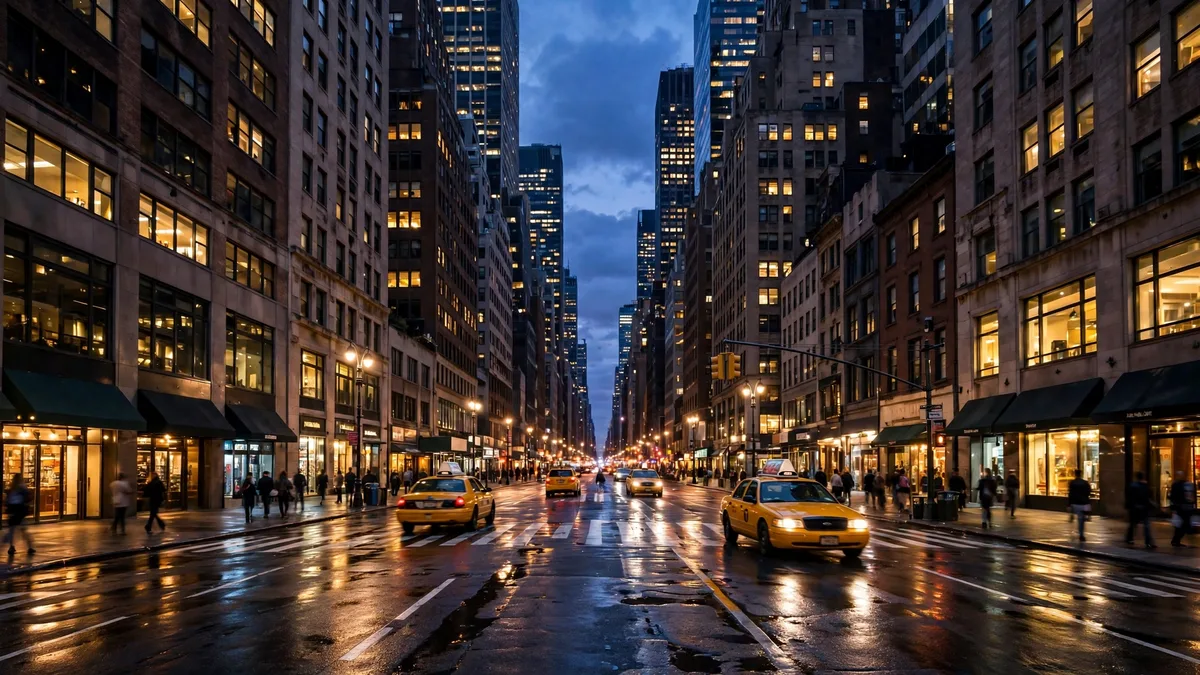

The 917 dial code is the telephone code for the whole of New York City, covering all five boroughs: Manhattan, Brooklyn, Queens, the Bronx and Staten Island. If you have seen a missed call from a number starting with 917, or you are wondering whether a 917 number means Manhattan or somewhere else entirely, the short answer is that it means New York City and nothing more specific than that. It was introduced in 1992 as the first overlay area code in the North American Numbering Plan, and it has been a familiar part of the city’s phone system ever since.
Area codes usually point to one place, but 917 is unusual: it sits on top of every other New York City code at once. This guide explains where it applies, why it was created, how it relates to the city’s better-known codes, and what to do when a 917 number appears on your phone.
Key takeaways
- The 917 dial code covers all five boroughs of New York City.
- It was introduced in February 1992, the first overlay code in North America.
- It was first used for mobile phones and pagers, to free up landline numbers.
- It overlays both 212 for Manhattan and 718 for the other boroughs.
- New York City uses ten-digit dialling, so always include the area code.
- A 917 number on its own proves nothing about who is calling.
Where the 917 dial code reaches
The 917 dial code reaches everywhere in New York City. That is the whole point of it. While 212 belongs to Manhattan and 718 belongs mainly to the Bronx, Brooklyn, Queens and Staten Island, 917 belongs to all five boroughs at once. A 917 number could be held by someone in a Manhattan office, a Brooklyn flat, a Queens restaurant, a Bronx school or a Staten Island home, and the code itself gives you no way to tell which. It is the one New York code that says “New York City” and nothing more.
This city-wide reach makes 917 different from almost every other area code in the United States. Most codes mark out a region, and a smaller code marks out a smaller region inside it. New York’s system is layered instead: several codes share the same ground, and 917 is the layer that stretches across all of them. If you are trying to work out where a caller is based, a 917 number will not narrow it down beyond the city limits, and that is worth knowing before you read anything into it.
How the 917 dial code began
By the early 1990s, New York City was running out of phone numbers. The 212 code, which had once covered the whole city, was under severe strain, and mobile phones were arriving fast. The usual fix would have been a split: carving the city into pieces and giving each piece its own code. Instead, the phone authorities tried something that had never been done before. On 4 February 1992, area code 917 was introduced as an overlay, layered over the existing codes rather than replacing any of them. It was the first overlay area code in the North American Numbering Plan.

The change came with a reorganisation. In 1992, the 212 code was restricted to Manhattan only, and the Bronx, along with the small Marble Hill area, moved into 718. At the same time, all boroughs were given the additional 917 code, arranged as an overlay. When it was established, 917 was intended for mobile phones, pagers and voicemail, and all mobile phones in the city were switched to it, freeing up numbers for additional landlines. The restriction of a code to one type of service was later ruled impermissible by the Federal Communications Commission, but the use of 917 in New York was allowed to continue as it was. Over time it became a general-purpose city code, used for landlines and internet phone lines as well as mobiles.
917 and the other New York City codes
To make sense of 917, it helps to see the family it belongs to. Manhattan’s codes are 212, the original and still the most sought-after, with 646 added in 1999 and 332 added in 2017 as further overlays. The other boroughs use 718, with 347 and 929 layered over it. The 917 code sits across both groups: it is a member of the Manhattan overlay group and of the outer-borough overlay group at the same time, which is why it is the only code that can appear anywhere in the city.
That history explains the reputation 917 carries. Because it began as the mobile code, it still feels like the number of someone on the move: a person with a mobile phone rather than a desk phone. Because it is city-wide, it also carries a certain anonymity: unlike 212, which immediately says Manhattan, 917 says only New York. For businesses, that breadth is part of the appeal, and a 917 number has long been a respectable choice for a company that works across the whole city rather than in one borough.
917 dial code at a glance
The table below sets out the main facts about the 917 code and the codes around it.
| Code | Where it applies | What to know |
|---|---|---|
| 917 | All five boroughs | City-wide overlay, introduced in 1992 |
| 212 | Manhattan only | The original city code, now Manhattan only |
| 718 | Bronx, Brooklyn, Queens, Staten Island | The outer-borough code since 1992 |
| 646 | Manhattan only | Overlay added in 1999 |
| 347 | Outer boroughs | Overlay for the 718 area |
| 332 | Manhattan only | Overlay added in 2017 |
Dialling a 917 number
Dialling a 917 number is straightforward, but the rules depend on where you are calling from. Inside New York City, you must dial all ten digits, including the 917 code, even if you are calling from one 917 number to another. Ten-digit dialling has been mandatory in the city since the overlay system began, because the same seven-digit number can exist under several different codes. From elsewhere in the United States, dial 1, then 917, then the seven-digit number. From abroad, dial your international prefix, then 1, then 917 and the number. The city runs on Eastern Time, so check the hour before you ring, especially from overseas.
There is one more thing worth knowing. Because 917 numbers are so common, and because the code carries no borough information, a 917 number is easy to imitate. Unwanted callers can display a 917 number whether or not they are in New York at all. The code is not a guarantee of anything about the caller, and it should never be treated as one.
Missed calls from 917 numbers
A missed call from a 917 number usually means someone in New York City tried to reach you, but that is all it means. It could be a business, a restaurant confirming a booking, a courier, a colleague, or a wrong number. The volume of calls in a city of this size means wrong numbers and misdials are common, and a single missed call is rarely a cause for concern.
As with any unknown number, the sensible habit is to let it go to voicemail and listen to the message before deciding. A genuine caller will usually leave one. If you do call back, use a number you find yourself, from an official website or a bill, rather than the number that called you. Never read out a security code, a password or bank details to someone who rang you unexpectedly, however familiar the area code looks. If the calls keep coming, your phone’s blocking tools and your carrier’s call-filtering options are the right next step, and a pattern of repeated silent calls is worth reporting to your carrier.
Your 917 dial code checklist
Use this list whenever a 917 number crosses your path.
- Remember the pairing: 917 means New York City, all five boroughs.
- Do not try to guess the borough from a 917 number: the code cannot tell you.
- Dial ten digits for every call inside New York City.
- From outside the United States, dial your prefix, then 1, then 917.
- Check the time zone before you ring: New York runs on Eastern Time.
- Let unknown 917 calls go to voicemail and listen before you call back.
- Never read out a security code or password to an unexpected caller.
- Remember that 917 began as the mobile code, so it says nothing about a landline.
- If you move within the city, you can usually keep your number.
- Tell contacts your full number, code included, so they dial it correctly.
Frequently asked questions
Where is the 917 dial code?
Area code 917 covers the whole of New York City: Manhattan, Brooklyn, Queens, the Bronx and Staten Island. It is an overlay code, so it shares its territory with the city’s other codes rather than marking out a separate area.
When was the 917 area code introduced?
Area code 917 was introduced on 4 February 1992. It was the first overlay area code in the North American Numbering Plan, created to relieve number shortages without forcing anyone to change their existing number.
What is the difference between 917 and 212?
The 212 code covers Manhattan only, while 917 covers all five boroughs. The 212 code is also older and more closely tied to Manhattan, whereas 917 began as the city’s mobile code and now serves the whole city.
Is 917 a Manhattan area code?
It is a New York City area code that includes Manhattan, but it is not Manhattan-only. A 917 number could belong to someone in any of the five boroughs, and the code itself gives no clue about which one.
Do I need to dial 1 before a 917 number?
Inside New York City, dial the ten-digit number with no 1 in front. From elsewhere in the United States, dial 1, then 917, then the seven-digit number. From abroad, dial your international prefix, then 1, then 917 and the number.
Is a call from a 917 number safe?
The area code alone cannot tell you that. A genuine New York business and an unwanted caller can both display a 917 number. Let unknown calls go to voicemail, call back on a number you find yourself, and never share security codes or bank details with an unexpected caller.
The bottom line
The 917 dial code is New York City in three digits: a code introduced in 1992 as the first overlay in North America, first given to mobile phones and pagers, and now spread across all five boroughs. Dial ten digits, do not try to read a borough into it, and judge unknown callers by what they say rather than by the code they display. For more on how American area codes work, see our guide to the 239 area code, our notes on the 866 area code, and our guide to the 913 area code.