
A vehicle inspection is a structured check of a car’s safety and roadworthiness, carried out by a qualified inspector who works through the brakes, tyres, lights, steering, suspension, exhaust and body in a set order. In Britain the best-known version is the annual MOT test for cars over three years old, but the same idea applies to pre-purchase inspections, fleet checks and the voluntary inspections many owners book before a long journey. The point of any inspection is the same: to find faults that are hard to spot from the driver’s seat, before they become dangerous or expensive.
Key takeaways
- A vehicle inspection is a structured safety check, not a service: it finds faults but does not fix them.
- The MOT is the statutory annual test for cars over three years old in Britain.
- Brakes, tyres, lights, steering, suspension, exhaust and the body are all checked.
- Simple preparation, such as topping up fluids and checking lights and tyres, prevents many failures.
- Faults are classed as dangerous, major or minor, and only the first two cause a failure.
- A pre-purchase inspection is a separate, advisory check that is worth booking before buying a used car.
What a vehicle inspection covers
A full inspection works through the car system by system, and the order is deliberate: the inspector starts with identity and documentation, then moves to the parts that affect safety most directly. The vehicle identification number is checked against the records, the registration plates are checked for condition and legibility, and the mileage is recorded. From there the inspection moves to the outside of the car: lights, indicators, reflectors, mirrors, wipers, washers, the horn, the windscreen and the bodywork.
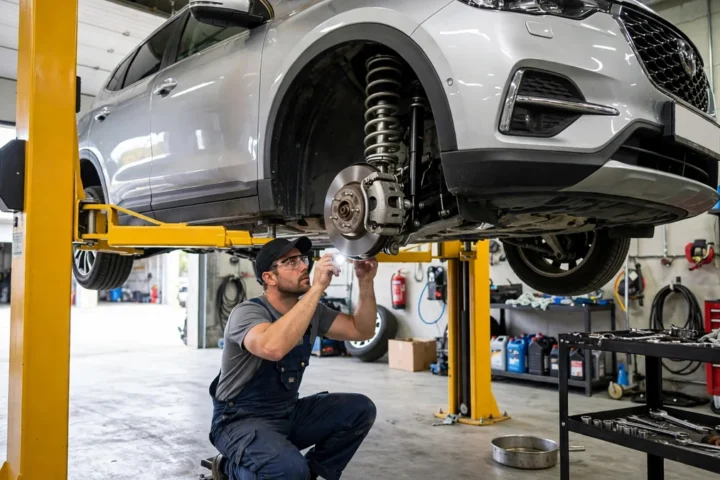
The brakes are one of the most important parts of any inspection. The inspector checks the condition of the pads, discs and drums, the brake pipes and hoses for leaks and corrosion, the handbrake for holding power, and the overall braking effort on a brake tester, which measures how evenly and strongly each wheel brakes. A car that pulls to one side under braking, or whose brakes are weak on one wheel, will fail. The steering is checked in a similar way: for play in the joints, for leaks in the power steering system, and for smooth operation from lock to lock.
The MOT and other kinds of inspection
In Britain, the MOT test is the inspection most drivers know. Cars, vans and motorcycles over three years old must be tested every year, and the test follows a standard set by the Driver and Vehicle Standards Agency. The result is a pass, or a fail with the faults listed, and the car must be repaired and retested before it can legally be driven on the road, except for a direct journey to a place of repair or a pre-booked retest. The MOT certificate is not a guarantee that the car is in good condition generally: it is a check that the car met the minimum safety and environmental standards on the day of the test.
How to prepare your car for inspection
Most inspection failures are caused by small, preventable faults, and a little preparation goes a long way. Start with the lights: walk around the car with a helper and check every bulb, including headlights on dipped and main beam, indicators, brake lights, reversing lights, fog lights and the number plate light. A single blown bulb is one of the most common reasons for a failure, and it costs very little to fix at home. Check the horn, the wipers and the washers too, and top up the washer fluid, because a washer that runs dry during the test is a failure. The same attention to preparation helps with any inspection, and our guide to heat pump repair makes the same point about checking the simple things before calling in a professional.
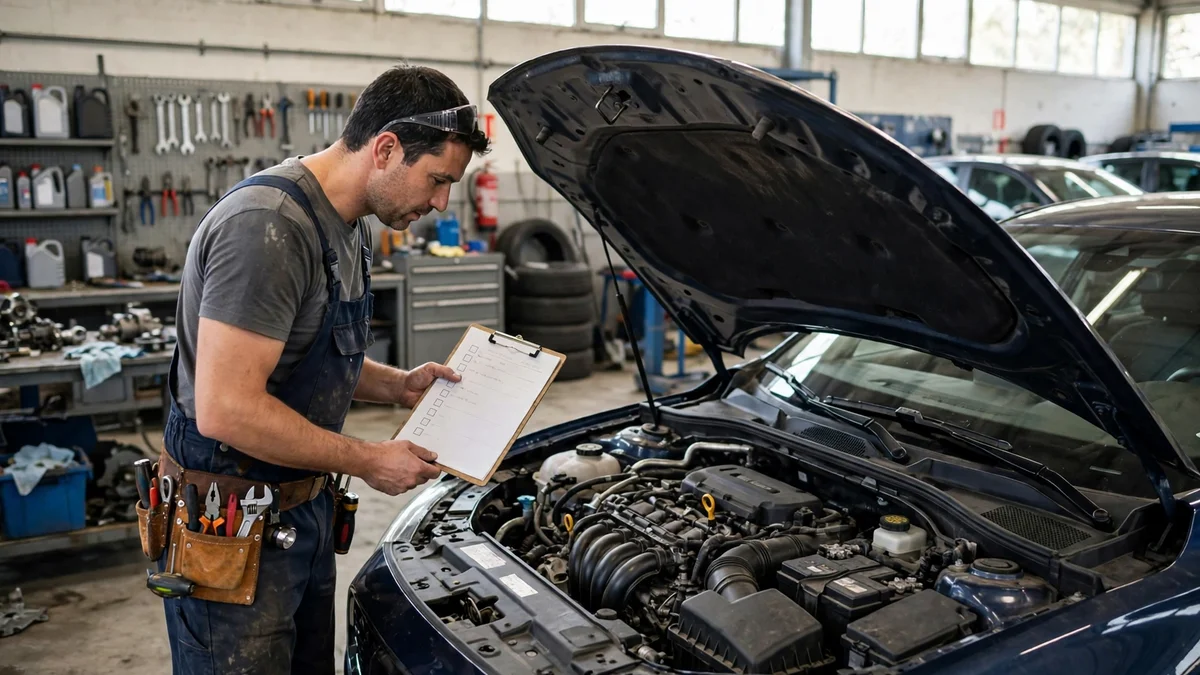
Next, check the tyres. The legal minimum tread depth in Britain is 1.6 millimetres across the central three-quarters of the tread, but a tyre close to that limit is worth replacing before the test rather than after it fails. Look for cuts, bulges and uneven wear, and check the pressures against the figure on the door pillar or in the handbook. Check the fluid levels under the bonnet: engine oil, coolant, brake fluid and power steering fluid should all sit between their marks, and the filler caps should be secure. None of this is difficult, and none of it needs special tools.
The most common reasons cars fail
Year after year, the same faults account for most inspection failures, and they are almost all easy to prevent. Lighting and signalling faults, especially blown bulbs and misaligned headlights, are the most common single cause. Tyre faults come next: tread below the legal limit, cuts, bulges and damage that the owner has not noticed. Brake faults follow, from worn pads and corroded pipes to weak handbrakes and uneven braking effort. Suspension faults, such as broken springs, worn bushes and leaking dampers, are common on older cars, and steering faults, usually play in a joint, are close behind.
What inspections check, at a glance
| System | What is checked | Common failure | Easy prevention |
|---|---|---|---|
| Lights and signals | All bulbs, alignment, indicators | Blown bulb, misaligned beam | Check every bulb monthly |
| Brakes | Pads, discs, pipes, handbrake, effort | Worn pads, corroded pipes | Listen for grinding, service on time |
| Tyres and wheels | Tread depth, damage, pressures | Tread below limit, cuts, bulges | Check tread and pressure monthly |
| Steering | Play in joints, power steering, operation | Worn joints, leaks | Note wandering or knocking early |
| Suspension | Springs, dampers, bushes, corrosion | Broken spring, leaking damper | Listen for knocks over bumps |
| Exhaust and emissions | Leaks, security, smoke, emissions | Excess emissions, leaks | Service regularly, fix warning lights |

Understanding the result
Inspection faults are classed by severity, and the class decides what happens next. A dangerous fault means the car must not be driven until it is repaired, because it poses a direct risk to road safety. A major fault means the car has failed and must be repaired and retested before it can be used normally. A minor fault does not cause a failure, but it is recorded on the certificate, and it should be repaired promptly before it becomes a major one. Advisories are notes about items that are wearing but have not yet failed, and they are a useful early warning for the owner. Checking the small details regularly, whether on a car or when looking up an area before a journey, as in our guide to Florida 904, is the habit that keeps surprises rare.
A checklist for preparing your car
- Check every light, including indicators, brake lights and the number plate light.
- Check tyre tread depth, pressures and look for cuts, bulges and uneven wear.
- Top up washer fluid, engine oil, coolant and brake fluid to their marks.
- Check the horn, wipers and washers all work properly.
- Make sure no dashboard warning lights stay on after starting.
- Clear the boot and cabin so the inspector can reach the belts, seats and spare wheel.
- Keep the fuel tank at least a quarter full for the emissions test.
- Book the test in good time so a failure leaves room for repair and retest.
Frequently asked questions
How often does my car need a vehicle inspection?
In Britain, cars over three years old need an annual MOT test, and the test must be renewed before the old certificate expires. Newer cars do not need one until their third anniversary. Other inspections, such as pre-purchase checks and fleet inspections, follow their own schedules. Check the rules where you live, because inspection requirements differ by country, and the intervals and the items checked are not the same everywhere.
Can I drive my car if it fails its inspection?
Usually only to a place of repair or to a pre-booked retest, and only if the fault is not classed as dangerous. A dangerous fault means the car must not be driven at all until it is repaired. If the previous certificate is still valid, some drivers assume they can keep using the car, but a dangerous fault overrides that, and driving with one can invalidate insurance. When in doubt, ask the test centre and arrange recovery.
What is the difference between an inspection and a service?
An inspection checks the car against a standard and reports faults; a service maintains the car by changing oil, filters and other consumables and checking wear items. A service can find faults, and an inspection can reveal work a service should have done, but they are different jobs. A car needs both: servicing keeps it healthy, and inspection confirms it meets the legal minimum. Neither replaces the other.
How long does a vehicle inspection take?
A standard MOT test usually takes under an hour, though it can take longer if the centre is busy or if faults need discussion. A pre-purchase inspection takes longer, often one to two hours, because it covers the car in more depth and includes a road test and a written report. Allow extra time for both, and do not book a test so close to a journey that a failure leaves you stranded.
Do I need to prepare anything before the test?
Bring the registration document and, if you have it, the previous test certificate. Make sure the car is clean, the boot and cabin are clear, the fuel tank is at least a quarter full, and the lights, tyres and fluid levels have been checked. If a warning light is on, have it diagnosed before the test. The preparation is simple, but it prevents many of the most common failures.
What should I do if I disagree with a failure?
Ask the tester to explain the fault and show you the problem on the car. If you still disagree, you can ask for a second opinion from another garage, or appeal through the official channel for the test in your country. Keep the failure sheet and take photographs of the disputed item. A second inspection is a reasonable step when a fault is borderline. The principle is the same as any careful search, from a disputed test result to the patient checking described in our guide to the metal detector: check carefully, record what you find, and do not rush a decision.
The bottom line
A vehicle inspection is a straightforward bargain: an hour of a trained inspector’s time in exchange for knowing where your car stands. Prepare the simple things yourself, book the test in good time, and treat advisories and minor faults as early warnings rather than paperwork to file away. A car that passes with no advisories is a car that has been looked after, and a car that fails has told you exactly what it needs. Either way, you leave knowing more than you did when you arrived, and that is the whole point.
Note: inspection rules and driving restrictions after a failure differ by country. In Britain, a car with a dangerous fault must not be driven until repaired, and driving a car without a valid test certificate can invalidate insurance. Check the current rules for your area before driving a car that has failed.