
A used Honda Civic can be a sound buy, because the Civic has been built in large numbers for decades, parts are widely available, and the model has a long reputation for practical, everyday transport. But a good reputation does not make every used example a good car, and the difference between a solid Civic and a tired one comes down to how it has been looked after. This guide explains which generations to compare, what to inspect before you hand over money, and the warning signs that should make you walk away.
Key takeaways
- The Civic has been built across many generations, so compare cars of the same generation rather than across decades.
- Service history matters more than the badge on the boot: a stamped book and old invoices are worth more than a clean wash.
- Check the body for uneven panel gaps and mismatched paint, which can point to accident repair.
- Start the engine from cold, listen for unusual noises, and test every gear on the drive.
- Look underneath for rust and leaks, and check the tyres for uneven wear.
- Walk away from a seller who rushes you, hides paperwork, or refuses an independent inspection.
The Civic generations, in brief
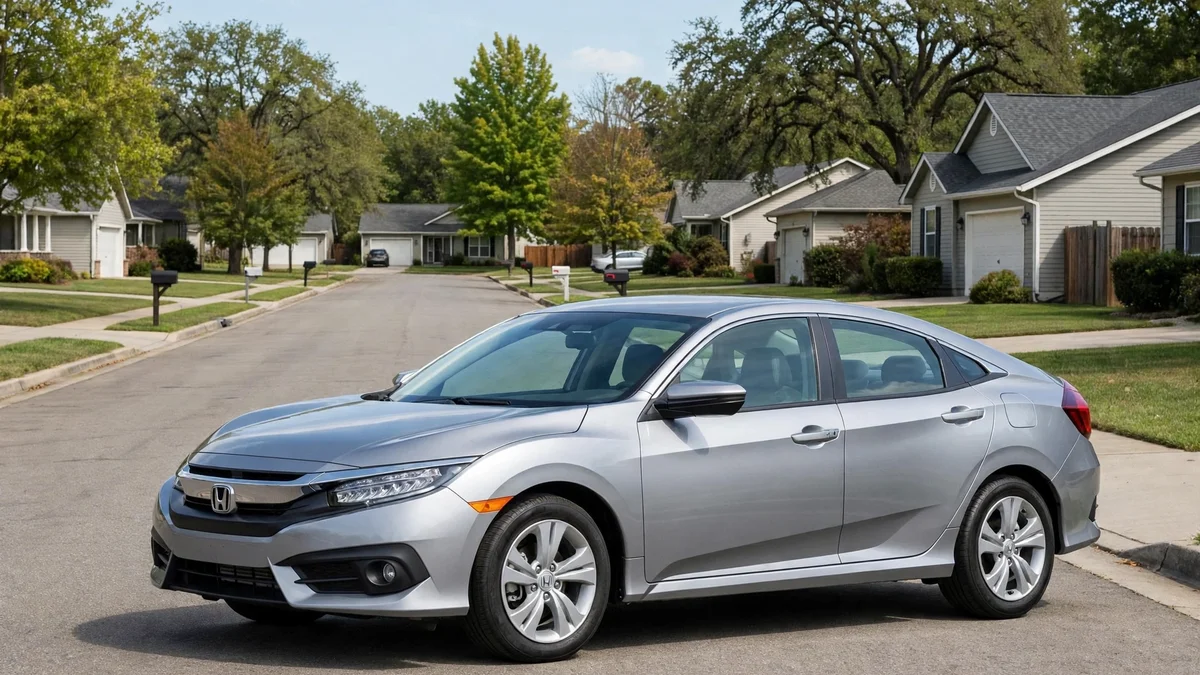
The Honda Civic has been in production since the early 1970s, and it has changed shape many times: from small hatchbacks to family saloons, coupes, estates and the high-performance Type R. The generations that most used buyers meet today are the later ones, built from the 2000s onwards, and each has its own character. The eighth-generation cars, built in the mid to late 2000s, are known for their distinctive dashboard and spacious cabin. The ninth generation, from the early 2010s, is more conventional inside and out. The tenth generation, from the mid 2010s, is larger, quieter and more refined, and the eleventh generation, from the early 2020s, continues that direction with more standard safety equipment.
Paperwork first, then the car
Before you look at the car itself, ask to see the paperwork. A service history with stamps and invoices tells you how the car has been treated, and a car with a full history is worth more than the same car without one. Look for regular servicing at sensible intervals, and for evidence that wear items such as brakes, tyres and batteries have been replaced when needed. A single gap in the history is not necessarily a problem, but a history made of one stamp and a shrug is a reason to be cautious.
Inspecting the body and the interior
Start outside, in daylight, on dry ground. Walk around the car slowly and look at the panel gaps: the spaces between the doors, the bonnet and the boot should be even on both sides. Uneven gaps, paint that does not quite match from one panel to the next, or overspray on rubbers and trim can all point to accident repair. Repair is not always a reason to reject a car, but it should have been declared, and it should have been done well. Look along the sides of the car for ripples in the reflection, which show where a panel has been filled and repainted.
Inside, the condition of the seats, the steering wheel and the pedals should match the mileage and the story the seller is telling. Check that every switch works: windows, mirrors, air conditioning, heater, lights, wipers and the infotainment screen. Air conditioning that blows warm may only need a regas, but it may also have a leak, and the cost of finding out is not yours to carry. Look under the floor mats for damp, and lift the boot floor to check for the spare wheel or repair kit and for any sign of water. A car that has spent its life in a warm, dry place will often show less rust than one from a wet, salty region, so ask where the car has lived. Checking the local details before you commit is a habit that pays off everywhere, from a used-car advert to looking up an area code in our guide to Florida 904.
Under the bonnet and underneath
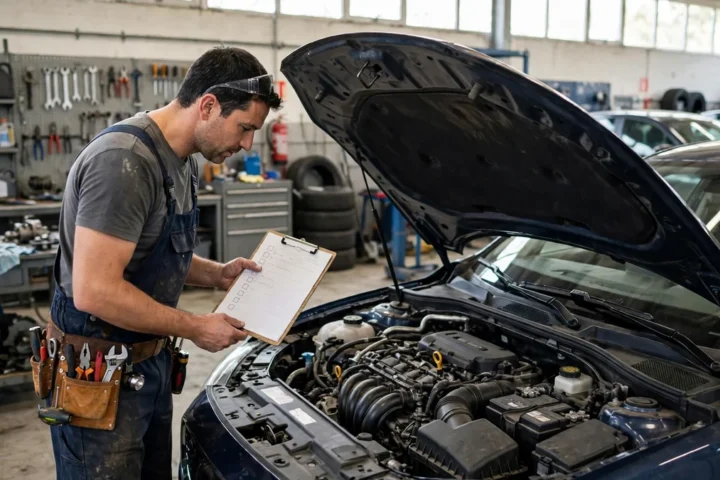
Ask the seller to start the engine from cold, so you can hear how it behaves before it warms up. A healthy engine should start promptly, idle smoothly and settle to a steady note. Listen for rattles, tapping or squealing, and watch the exhaust for smoke: a puff on start-up that clears quickly is usually harmless, but persistent blue or white smoke is a warning sign. Check the oil on the dipstick: it should be a clear amber or brown, not black and thick, and not milky, which can point to coolant mixing with the oil. The coolant reservoir should be filled to its mark with clean coolant, not rusty water.
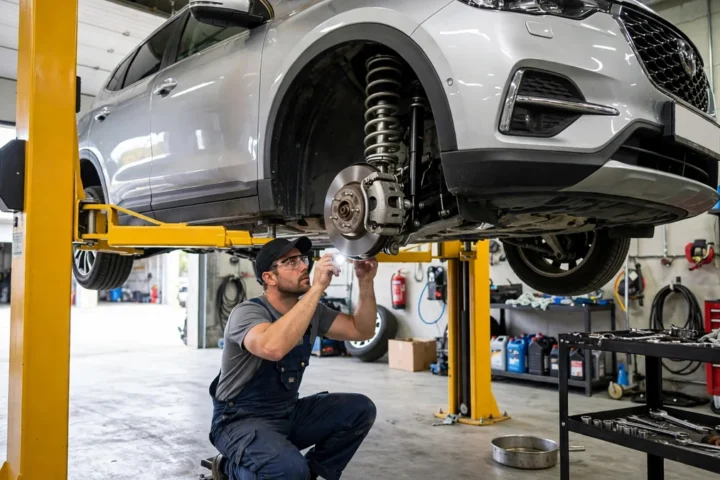
Getting underneath the car matters as well, and a torch and a willingness to kneel are enough for a first look. Check the exhaust for rust and holes, the suspension for leaking dampers and broken springs, and the floor for rust or damage. Look at the tyres: they should match across each axle, have even wear across the tread, and carry a sensible amount of tread. Uneven wear can point to suspension or alignment problems, and a set of mismatched budget tyres on an otherwise tidy car can suggest an owner who cut corners. If you can arrange it, an inspection on a lift at a garage is the best money you will spend before buying, and a seller who refuses one is a seller to avoid. The same principle applies to any skilled trade: a written check by a professional, as our guide to heat pump repair explains for home heating, is worth more than a guess.
The test drive
A test drive should cover town roads, a faster road and, if possible, a stretch with bumps and turns. Before you move off, check the clutch: it should bite smoothly part-way up the pedal travel, without slipping or juddering. An automatic should change gear smoothly, without harsh jolts or long delays, and a manual should go into every gear cleanly, including reverse. Listen for grinding, whining or clunking from the gearbox, and feel for vibration through the steering wheel or the pedals.
Used Honda Civic generations compared
| Generation | Era | Character | What to check |
|---|---|---|---|
| Eighth | Mid to late 2000s | Distinctive cabin, spacious hatchback | Dashboard wear, rear suspension, rust |
| Ninth | Early 2010s | More conventional, comfortable | Service history, clutch, air conditioning |
| Tenth | Mid 2010s onwards | Larger, quieter, more refined | Turbo engines, electronics, paint condition |
| Eleventh | Early 2020s onwards | Hybrid focus, more safety equipment | Hybrid battery history, driver aids |
| Type R (any) | Various years | High performance, firm ride | Hard use, modifications, tyre condition |

Warning signs that should end the deal
Some faults are worth negotiating over, and some should end the deal outright. Walk away if the paperwork does not match the car, if the mileage does not match the service history, or if the seller refuses a history check or an independent inspection. Walk away if the car has been written off and the repair is undocumented, if the engine smokes persistently, or if the gearbox slips, grinds or refuses a gear. Walk away if the car pulls sharply under braking, if a suspension corner sits visibly low, or if the seller pressures you to decide on the spot.
A checklist for buying a used Honda Civic
- Check the paperwork: registration document, service history, invoices and history check.
- Confirm the mileage rises steadily through the service invoices and matches the odometer.
- Inspect the body in daylight for uneven gaps, mismatched paint and rust.
- Check the interior: seats, steering wheel, pedals, switches and damp under the mats.
- Start the engine from cold, listen for noises, and check the oil and coolant.
- Look underneath for leaks, rust and damaged suspension, and check the tyres.
- Test drive for at least twenty minutes on town roads and a faster road.
- Arrange an independent garage inspection before you agree a price.
Frequently asked questions
Which used Honda Civic generation is best?
There is no single best generation, because the right choice depends on your budget, your driving and the individual car. Later generations are more refined and carry more safety equipment, while earlier generations are simpler and often cheaper to maintain. Compare several cars from the same generation, and let condition and service history decide, rather than the year on the plate alone.
What should I check first on a used Civic?
Start with the paperwork: the registration document, the service history and a history check for finance and write-off status. Then check the body for accident repair and rust, start the engine from cold, and test drive the car on varied roads. If the paperwork and the first inspection look good, arrange an independent garage inspection before you agree a price.
Is a high-mileage Honda Civic a bad buy?
Not necessarily. A high-mileage car with a full service history and a careful owner can be a better buy than a low-mileage car that has been neglected. What matters is how the mileage was covered and how the car was maintained. Check the service invoices, look at the wear on the seats, steering wheel and pedals, and be wary of any car whose mileage does not match its history.
Should I buy a used Civic privately or from a dealer?
Both can work. A dealer usually offers some warranty and a right to return a faulty car, while a private sale is often cheaper but offers less protection. Whatever route you choose, inspect the car in the same way, check the paperwork, and arrange an independent inspection. The seller’s type matters less than the car’s condition and the honesty of the sale.
What does a pre-purchase inspection cover?
A pre-purchase inspection is a check by an independent garage, usually on a lift, covering the engine, gearbox, suspension, brakes, tyres, steering, exhaust and body. The garage will note leaks, wear, rust and any faults that need attention, and give you a written report. It is the best way to find problems that are hard to spot on a driveway, and it gives you a firm basis for negotiating the price.
Are modified Civics worth buying?
Modified cars need extra care. Some modifications are well done and well documented, but others are poorly fitted, undeclared to the insurer, or a sign that the car has been driven hard. Ask for receipts and details of every modification, check that the car is insured as modified, and have the work inspected by a garage. A standard car is usually the safer buy, and the same rule that applies to choosing any everyday item applies here: pick the version whose history you can verify, whether it is a car or a best water bottle for a long day out.
The bottom line
A used Honda Civic rewards the buyer who takes their time. Pick a generation that fits your budget, check the paperwork before you fall for the car, inspect the body, the engine and the underside, and drive it properly on varied roads. A full service history and a clean independent inspection are worth more than a shiny wash and a confident seller. There are many Civics for sale, and the right one is the one whose condition matches its story.