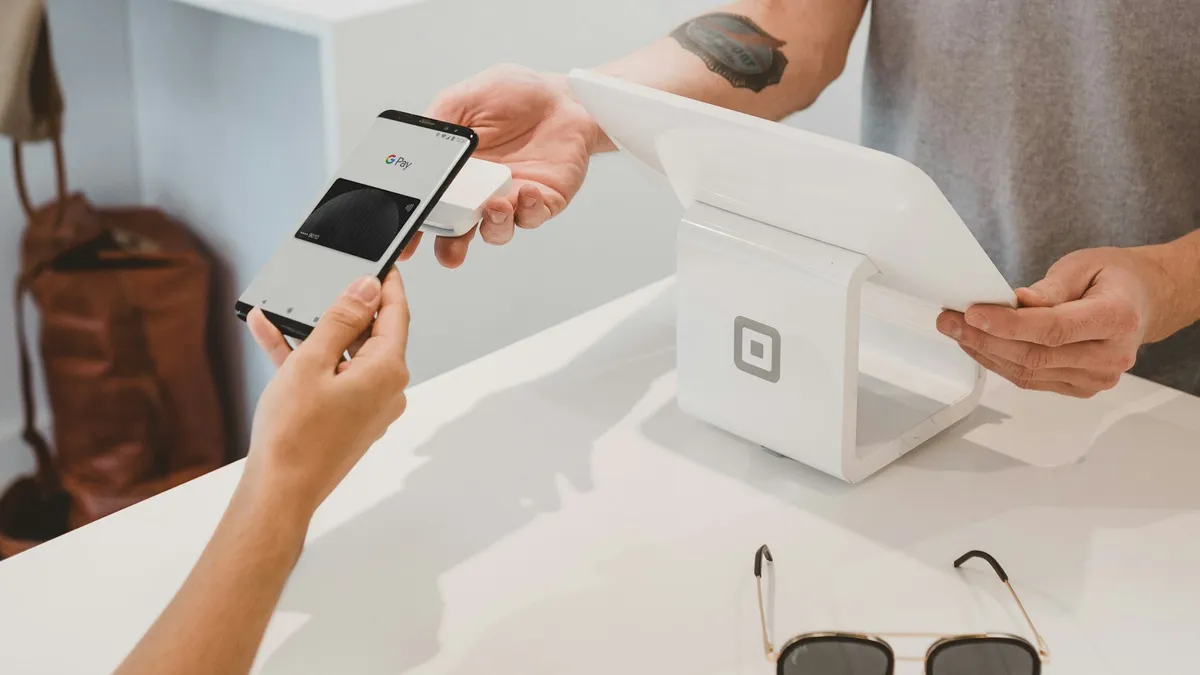

Embedded finance is the practice of building financial services directly into products and apps that are not themselves banks. Instead of going to a bank to borrow, pay, insure or save, you use those services inside the app or website you are already using: you split a purchase into instalments at the checkout, you pay for a ride inside a taxi app, or you take out cover for a delivery inside the shopping app.
The idea is simple, even if the machinery behind it is not. Financial services are offered at the exact moment they are useful, by a company you already trust, without sending you to a separate bank. This guide explains how embedded finance works, where you already meet it, who provides it, and what to watch out for before you use it.
Key takeaways
- Embedded finance puts banking services inside non-bank apps, at the point where you need them.
- Common examples: paying in instalments at checkout, in-app payments, and insurance offered during a purchase.
- The service is usually provided by a licensed bank or financial firm working behind the scenes.
- For businesses, it can speed up checkout and open up new ways of earning money.
- For users, the convenience is real, but the terms still deserve a careful read.
- Embedded finance is regulated in most countries, and the provider must say who is behind the service.
How embedded finance works
Behind every embedded finance service there are usually three parties. There is the company you deal with, such as a retailer, a taxi app, or an online marketplace. There is a licensed financial firm, usually a bank or a payment company, that actually provides the service and holds the money or carries the risk. And there is often a technology company in the middle that connects the two, supplying the software that makes the service work inside the app.
When you choose to pay in instalments at a checkout, for example, the retailer does not lend you the money itself. A lender behind the scenes approves the loan, pays the retailer, and collects the repayments from you. When you pay for a taxi inside the app, a payment firm moves the money to the driver. You see the retailer’s brand, but the financial work is done by a regulated firm whose name should appear in the small print.
This structure is what makes embedded finance possible at scale. A retailer would need a banking licence, a compliance team, and a great deal of capital to lend money itself. By working with a licensed partner through a technology platform, it can offer the service without becoming a bank.
Where you already meet embedded finance
Most people have used embedded finance without knowing the name for it. Paying in instalments at an online checkout, often described as buy now, pay later, is the best-known example. You choose the option, the lender checks your details, and you pay over a few weeks or months. The service appears as part of the shop’s checkout, not as a separate loan application, and that is the whole point.
In-app payments are another everyday example. When you order a taxi, a takeaway, or a grocery delivery, you pay inside the app, and the money is split between the driver or the restaurant and the platform. You never visit a bank or a payment website. The app stores your card, handles the payment, and shows you the receipt, all in one place.
Insurance is increasingly sold this way too. When you buy a phone, a flight, or a piece of furniture, you may be offered cover at the checkout, priced for that one purchase. The same applies to branded cards offered by shops and airlines: the card carries the retailer’s name, but the money and the credit come from a bank working behind the scenes.

Why businesses offer it
For the company offering the service, embedded finance can make a real difference to sales. A checkout that offers instalments can turn a hesitant shopper into a buyer, because the cost is spread over time. A checkout that remembers your payment details and lets you pay in one tap can reduce the number of people who abandon a full basket.
There is also money in it. The company offering the service usually earns a fee, or a share of the revenue, from the financial firm behind it. A retailer that offers a branded card may earn a share of the fees, and a marketplace that offers loans to its sellers may earn interest through its partner. This is why embedded finance has grown so quickly: it is a source of income as well as a convenience.
Who regulates embedded finance
Embedded finance is regulated, but the rules can be confusing, because the company you see is often not the company that is regulated. The licensed bank or payment firm behind the service is the one that must follow financial rules: it must check who its customers are, protect their money, and treat them fairly. The retailer or app that offers the service must make clear who that firm is, and what happens if something goes wrong.
That is why the small print matters. Before you use an embedded finance service, you should be able to find out who the lender, the insurer or the payment firm is, and how to complain if there is a problem. If a service does not tell you who is behind it, that is a warning sign.
What to watch out for
The convenience of embedded finance can make it easy to agree to something without thinking it through. An instalment plan offered at the checkout takes seconds to accept, but it is still a loan, and missing a payment can lead to fees or a damaged credit record. Ask whether the repayments fit comfortably in your budget.
Insurance offered at the checkout deserves the same care. Cover for a single purchase can be useful, but it can also duplicate cover you already have, for example through a home insurance policy or a bank account. Read what is covered, what is excluded, and how to make a claim, before you pay.
There is also a privacy question. Embedded finance works because the company offering the service knows a great deal about you: what you buy, when you buy it, and how much you spend. That information is used to decide what to offer you, and it may be shared with the financial firm behind the service. Check the privacy notice to see what is shared, and with whom, before you agree.
| Embedded service | Where you meet it | Who provides it |
|---|---|---|
| Pay in instalments | Online checkout | A licensed lender behind the shop |
| In-app payments | Taxi, food and shopping apps | A payment firm moving the money |
| Purchase insurance | Checkout for phones, travel, furniture | An insurer underwriting the cover |
| Branded cards | Shops, airlines, technology firms | A bank issuing the card |
| Business loans | Accounting and invoicing software | A lender using the firm’s sales data |
| Business accounts | Marketplaces and software platforms | A bank holding the funds |
Embedded finance and the future of banking
Embedded finance is changing what a bank is for. For most of history, banking meant going to a bank, whether a building or a website, and using its services there. Embedded finance turns that around: the services come to you, inside the products you already use, and the bank becomes a background provider rather than a destination. Some banks welcome this, because it brings them customers they could not reach alone.
For users, the change is mostly one of convenience. Banking becomes something that happens as part of another task, rather than a task in itself. That is a genuine improvement when the service is well designed and fairly priced. It is less of an improvement when the convenience hides the cost, or when it encourages people to borrow more than they can afford.
Your embedded finance checklist
Use this list before you accept a financial service inside an app or a checkout.
- Find out who the lender, insurer or payment firm behind the service is, and check that it is licensed.
- Read the terms, including the interest rate, the fees, and what happens if you miss a payment.
- Ask whether the service duplicates cover or credit you already have.
- Check whether you could afford the repayments if your income fell.
- Look at the privacy notice to see what personal and spending data is shared, and with whom.
- Compare the offer with a standalone alternative, such as your own bank or insurer.
- Keep a record of what you agreed to, including the provider’s name and how to complain.
- Be careful with instalment plans for non-essential purchases: convenience is not a reason to borrow.
- Check what happens if the retailer or app closes down, and who holds your money or your loan.
- Review your embedded services from time to time, and cancel any you no longer need.
Frequently asked questions
Is embedded finance the same as online banking?
No. Online banking is a bank’s own website or app, where you use the bank’s services directly. Embedded finance puts those services inside another company’s product, such as a shop or a taxi app, so you use them without visiting the bank at all.
Is embedded finance safe?
It can be, when the firm behind the service is licensed and regulated. Your money should be held by a regulated firm, and the service should tell you who that firm is. The main risks are unclear terms, high fees, and borrowing more than you can afford.
What is the most common example of embedded finance?
Paying in instalments at an online checkout is the best-known example, along with paying inside a taxi or food delivery app.
Do I need a bank account to use embedded finance?
Usually, yes, because the service needs a way to take payment from you. An instalment plan is normally repaid from a bank account or a card. Some services, such as a wallet inside an app, can hold a balance of their own, but that balance is still held by a licensed firm.
Who do I complain to if something goes wrong?
Start with the company that offered the service, then with the financial firm behind it, whose name should be in the terms. If the problem is not resolved, you can usually complain to the financial regulator or ombudsman in your country.
Will embedded finance replace banks?
Probably not. Banks still hold the licences, the capital and the regulatory responsibility behind most embedded services. What is changing is where you meet the bank: more often inside the apps and shops you already use.
The bottom line
Embedded finance is banking that comes to you, inside the apps and checkouts you already use, rather than asking you to go to a bank. It can make paying, borrowing and insuring simpler and faster, and it has already become part of everyday life for many people. The convenience is real, but the service is still a financial product, with terms, costs and a regulated firm behind it. Read those terms, know who you are dealing with, and use the convenience without letting it make your decisions for you. For more on money and payment services, see our guide to premier bank card, our guide to OFX, and our guide to edfinancial services.
This article is general information, not financial advice. Before borrowing, insuring or opening an account, read the terms carefully and consider advice from a qualified professional if you are unsure.