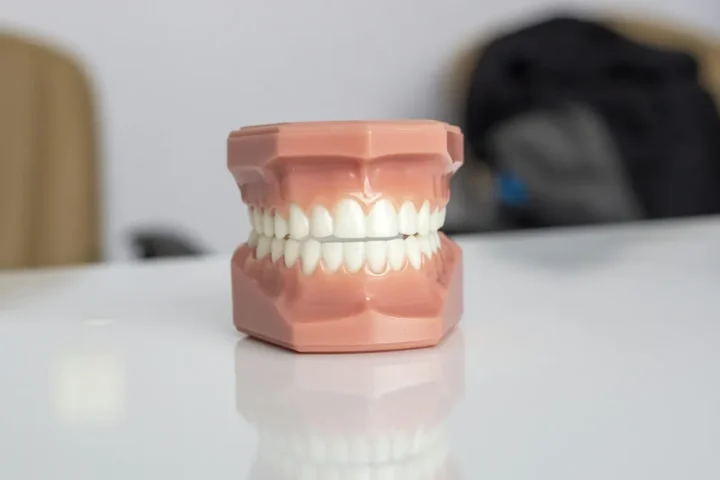

Wisdom teeth are the third molars, the last teeth to appear, usually in the late teens or early twenties. Dentists pay them close attention because they are the teeth most likely to cause trouble: there is often not enough room for them in the jaw, so they can come through at an angle, get stuck, or only partly emerge. If you are wondering whether your wisdom teeth need to come out, the short answer is that many do not, and the decision is made tooth by tooth, with X-rays and an examination, not by age alone.
This guide explains what wisdom teeth are, why they cause problems, how dentists decide between watching and removing them, what removal involves, and how recovery usually goes.
Key takeaways
- Wisdom teeth are the third molars, usually appearing in the late teens or early twenties.
- Problems arise when there is not enough room in the jaw for them to emerge properly.
- Many wisdom teeth cause no trouble and are simply monitored at check-ups.
- Removal is usually advised for pain, repeated infection, decay or damage to nearby teeth.
- Assessment is done with an examination and X-rays, often a panoramic image.
- Recovery usually takes a few days of rest, soft food and careful cleaning.
What wisdom teeth are, and why they cause trouble
Most adults have four wisdom teeth, one at the back of each corner of the mouth, although some people have fewer, and a few have none at all. They are the last molars to develop, and they arrive long after the other adult teeth have settled into place. In earlier times, when diets were tougher and teeth wore down faster, the extra molars were useful. Today, jaws are often smaller, and by the time wisdom teeth try to emerge, the space they need is already taken.
That shortage of room causes most wisdom tooth problems. A tooth may emerge at an angle and press against the molar in front of it, or it may only partly break through the gum, leaving a flap of tissue where food and bacteria collect. A tooth that cannot emerge at all is called impacted, and it may sit quietly for years or cause pain, swelling and infection. Even a wisdom tooth that comes through straight can be hard to clean, since it sits so far back, and that makes it more likely to develop decay or gum disease.
It is worth remembering that not every wisdom tooth is a problem. Many emerge normally, sit comfortably in line with the other teeth, and are easy to keep clean. Those teeth need no treatment beyond ordinary brushing and regular check-ups. The difficulty is knowing which teeth will behave and which will not, and that is why dentists keep an eye on them through the late teens and twenties, when they are still developing.
How dentists assess wisdom teeth
Assessment starts with a conversation and an examination. Your dentist will ask about pain, swelling, bad taste, difficulty opening your mouth, or repeated infections around the back teeth. They will look at how the wisdom teeth are emerging, whether the gum around them is healthy, and whether there is room for them. If a tooth is partly covered by gum, they will check whether food is getting trapped underneath, since that is a common cause of soreness.

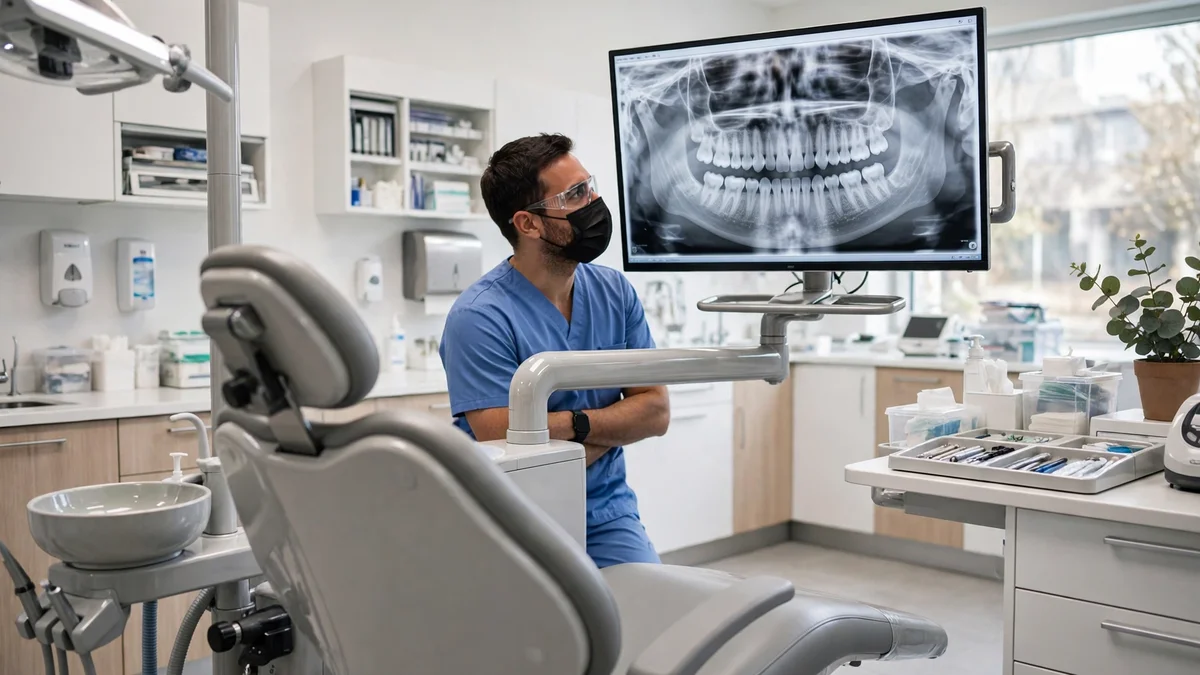
X-rays are the next step, and the most common is a panoramic X-ray, which shows all the teeth and both jaws in a single image. It lets the dentist see the angle of each wisdom tooth, how close it sits to the nerve in the lower jaw, and whether it is pressing on the tooth in front. In some cases, a more detailed three-dimensional scan is used, particularly when a lower wisdom tooth sits close to the nerve. The images, together with your symptoms, are what the decision is based on.
What the dentist is weighing is the balance of risks. Removing a tooth that would never have caused trouble is an unnecessary procedure, while leaving a tooth that is damaging its neighbour can lead to bigger problems. That is why the advice is individual: two people with wisdom teeth at the same angle can be given different advice, because their symptoms, their age and the position of the nerve all differ.
When removal is recommended, and when it is not
Removal is usually recommended when a wisdom tooth is causing repeated problems. The clearest reasons are pain that keeps coming back, infections around a partly emerged tooth, decay in the wisdom tooth or in the molar next to it, and gum disease around the back teeth. A tooth that is damaging its neighbour, or a cyst forming around an unerupted tooth, is also a reason to remove it. In these cases, taking the tooth out removes the cause of the trouble, and most dentists will advise it rather than waiting for the next flare-up.
Removal is not usually recommended for a wisdom tooth that is healthy, pain-free, easy to clean and in line with the other teeth. Dentists also tend to be cautious about removing teeth that sit very close to the nerve in the lower jaw, since the risk of nerve disturbance is higher there. Age matters too: removal is often simpler in younger adults, when the roots are less developed and the bone is softer, so a dentist may suggest removing a troublesome tooth sooner rather than later, while still explaining the trade-offs.
There is one more situation worth mentioning, which is the tooth that causes no symptoms at all but looks likely to cause trouble later. Here the advice varies, and it is a good topic to discuss rather than to rush. Ask your dentist what they expect to happen if the tooth stays, how likely that is, and what would change their advice. A dentist who explains the reasoning is giving you the information you need to decide together.
What removal involves
Wisdom tooth removal is usually done in the dental practice, under local anaesthetic, and it is a routine procedure for dentists and oral surgeons. The dentist will numb the area, then loosen and remove the tooth. A tooth that has fully emerged usually comes out in one piece, while a tooth that is stuck may need a small cut in the gum and the removal of a little bone before it can be lifted out. Sometimes the tooth is divided into pieces to make removal easier. Stitches may be used to close the gum, and they usually dissolve on their own.
Most removals take well under an hour, although a difficult lower tooth can take longer. You will be awake, and you should feel pressure but not pain. Sedation is available in many practices for people who are very anxious, and some complex cases are referred to hospital, where general anaesthetic may be an option. Your dentist will explain which setting suits your case and what to expect on the day.
Afterwards, you will be given instructions for the first days, and they are worth following closely. The socket will bleed a little at first, and biting on gauze helps it stop. Swelling and soreness are normal for a few days, and pain relief and rest help. Soft food, plenty of fluids and avoiding smoking and alcohol all help healing. One instruction matters more than the rest: avoid vigorous rinsing, spitting and drinking through a straw for the first day, since disturbing the blood clot in the socket can lead to a painful condition called dry socket.
| Situation | Usual approach | Why |
|---|---|---|
| Healthy, pain-free, easy to clean | Monitor at check-ups | No problem to solve |
| Repeated pain or infection | Removal usually advised | Takes away the cause |
| Decay in the wisdom tooth | Removal usually advised | Hard to fill so far back |
| Damaging the next tooth | Removal usually advised | Protects the healthy molar |
| Close to the lower jaw nerve | Careful assessment first | Higher risk of nerve effects |
| No symptoms, may cause trouble | Discuss and decide together | Balance of risks differs |
Your wisdom teeth checklist
Use this list before and after any wisdom tooth treatment, so you know what to ask and what to do.
- Ask for an X-ray assessment if a back tooth hurts, swells or keeps getting infected.
- Ask the dentist to explain the angle of the tooth and how close it is to the nerve.
- Ask what would happen if the tooth stays, and what would change their advice.
- Tell the dentist about medicines, allergies and any bleeding problems before removal.
- Arrange a lift home if you are having sedation, and plan a quiet day afterwards.
- Stock up on soft food, such as soup, yoghurt and mashed potato, before the appointment.
- Follow the aftercare instructions, especially about rinsing and straws on the first day.
- Take pain relief as advised, and rest for the first day or two.
- Call the practice if bleeding will not stop, pain gets worse after a few days, or you develop a fever.
- Keep brushing the other teeth gently, and clean around the socket as the dentist advises.
Frequently asked questions
Do all wisdom teeth need to be removed?
No. Many wisdom teeth cause no trouble and are simply monitored at check-ups. Removal is usually advised only when a tooth causes pain, repeated infection, decay, or damage to a neighbouring tooth, or when it is clearly likely to do so.
At what age do wisdom teeth come through?
Usually in the late teens or early twenties, although the timing varies a great deal. Some appear earlier, some later, and some never emerge at all. Your dentist can see developing wisdom teeth on X-rays before they appear.
Is wisdom tooth removal painful?
The procedure itself is done under local anaesthetic, so you should feel pressure but not pain. Soreness and swelling afterwards are normal for a few days, and pain relief, rest and soft food usually manage it well.
How long does recovery take?
Most people feel much better within a few days, and the gum usually heals over a week or two. The socket underneath takes longer to fill in fully. Following the aftercare instructions, especially in the first day, makes recovery smoother.
What is dry socket?
Dry socket is a painful condition that can follow removal if the blood clot in the socket is disturbed or lost. It usually appears a few days after the procedure, with pain that gets worse rather than better. It is treated by the dentist, so contact the practice if that happens.
Can I eat normally after wisdom tooth removal?
Not on the first day. Soft food, such as soup, yoghurt and mashed potato, is the easiest choice until the soreness settles. Avoid very hot food, alcohol and smoking, and do not drink through a straw for the first day.
The bottom line
Wisdom teeth are not a problem by themselves. They are ordinary molars that arrive late, in a jaw that may not have room for them, and the sensible approach is to watch them, assess them with X-rays, and act only when there is a clear reason. If yours are pain-free and easy to clean, they may never need attention. If they keep hurting, getting infected or damaging the tooth next door, removal is a routine procedure with a recovery measured in days. Either way, the decision is one to make with your dentist, not on your own. For more on looking after your teeth, see our guide to TMJ symptoms, our guide to flexible dentures, and our guide to how much do dentures cost.
This article is general information, not dental advice. If you have tooth pain, swelling, bleeding that will not stop, or a fever after a tooth procedure, see a dentist promptly.