
The best picnic recipes are the ones that travel well, taste good at room temperature, and can be eaten without a plate, a knife or a fuss: sturdy sandwiches, grain salads, wraps, frittata slices and fruit that holds up in a basket. If you want a picnic that feels generous rather than improvised, the trick is to cook most of it the night before, pack it in layers, and bring food that improves after a few hours rather than food that wilts. This guide covers the recipes that work, how to pack them, and how to keep everything safe to eat.
A picnic is a different kind of cooking. There is no oven, no fridge and often no table, so every dish has to survive a car journey, sit happily in the sun for an hour, and still be something people want to eat. The recipes below are chosen for exactly that: they are portable, make-ahead, and forgiving, and none of them needs precise timing or last-minute work.
Key takeaways
- Choose food that tastes good at room temperature and needs no cutlery.
- Cook most of the picnic the night before and chill it overnight.
- Sturdy breads, wraps and grain salads travel far better than leafy salads.
- Pack cold food with ice packs and keep it out of direct sun.
- Bring a separate bag for rubbish and a damp cloth for hands.
- Follow the two-hour rule: perishable food should not sit out longer than that.
Sandwiches and wraps that survive the journey
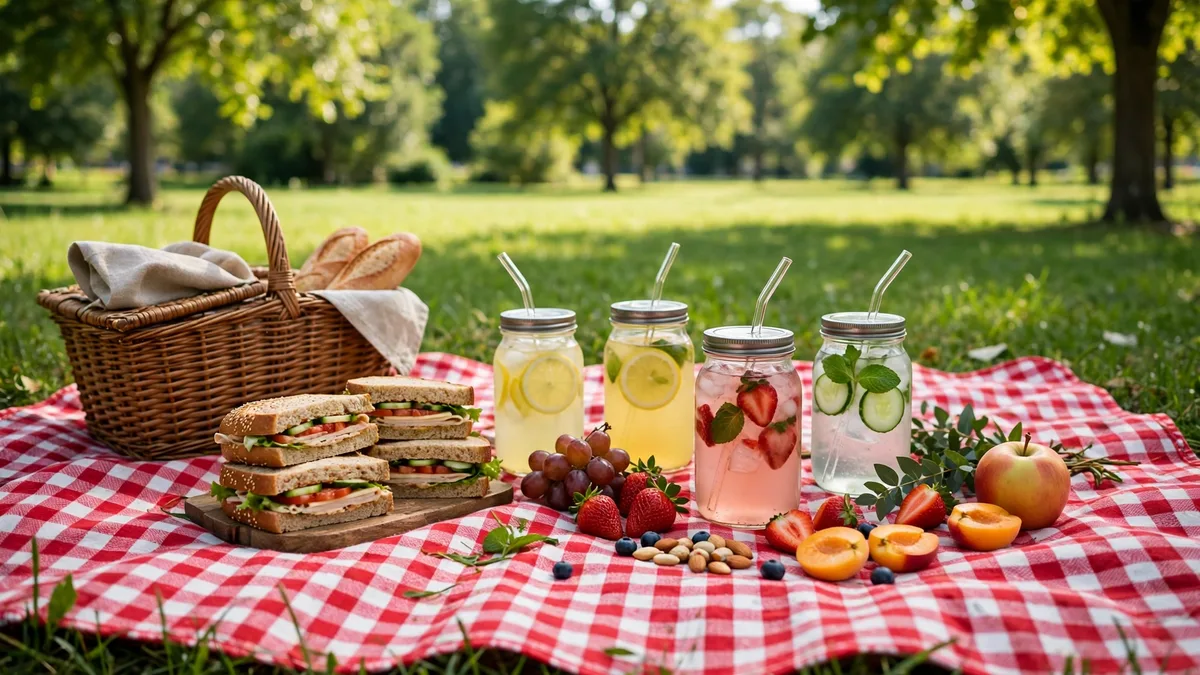
A good picnic sandwich starts with the right bread. A crusty baguette, a sturdy sourdough or a thick white loaf holds up far better than soft sliced bread, which goes soggy within the hour. Spread a thin layer of butter or cream cheese on both slices first: it acts as a barrier against wet fillings. Then layer in sliced chicken or turkey, cheese, tomato and a few salad leaves, and wrap each sandwich tightly in baking paper before cutting it in half.
Wraps are even hardier. Spread a large flatbread with hummus or soft cheese, add roasted vegetables, shredded chicken or falafel, roll it firmly, and wrap it in foil. Cut the roll in half just before serving so the filling stays put. For a vegetarian option, a wrap of roasted aubergine, peppers and feta with a little pesto is filling and travels well. Avoid fillings that drip: keep dressings and sauces in small pots and let people add their own.
Salads that taste better after a few hours
The best picnic salads are the ones that improve with time. A pasta salad of short pasta, cherry tomatoes, olives, cubed cheese and a simple oil-and-lemon dressing is a classic for a reason: it can be made the night before and eaten cold the next day. A grain salad of cooked couscous or bulgur wheat with roasted vegetables, herbs and a squeeze of lemon is just as reliable, and it feeds a crowd cheaply.
Potato salad is another picnic staple, but keep it simple: boiled new potatoes tossed while warm with a little oil, vinegar, mustard and chopped herbs, then chilled. A mayonnaise-based version is fine too, as long as it stays cold in the cool bag. Leafy salads, by contrast, are best left at home: they wilt in the sun, need a bowl and dressing at the last minute, and rarely survive the journey. If you want something green, pack cucumber, celery and radishes to eat as they are.

Hot food, cold food and things to nibble
A slice of cold frittata is one of the finest picnic foods there is. Whisk eggs with whatever you have, such as spinach, mushrooms, cheese or leftover roast vegetables, cook it gently in a pan, let it cool, and cut it into wedges. It holds its shape, needs no reheating and is good for children and adults alike. Scotch eggs, sausage rolls and small quiches play the same role: savoury, portable and satisfying.
For nibbling, pack a simple cheese board: a hard cheese, a soft cheese, crackers, grapes and a handful of nuts. Add hummus with vegetable sticks and pitta, and a small pot of olives. Fruit is the easiest dessert of all: grapes, strawberries, cherries, apples and easy-peel satsumas need no preparation and no plates. If you want something sweet to finish, brownies, flapjacks and lemon drizzle slices all travel well, while anything with cream or custard should stay in the fridge at home.
Drinks for a picnic
Water is the most important drink at any picnic, and it is worth bringing more than you think you need, especially on a hot day. A flask of homemade lemonade, made with lemons, sugar and cold water and kept chilled, is a simple crowd-pleaser. Iced tea, brewed the night before with a few mint leaves, is another easy option that improves after a night in the fridge.
Avoid glass bottles where you can: they are heavy and they break on hard ground. Use reusable bottles or sturdy plastic ones, and pack a few extra cups for children. If you bring anything fizzy, keep it upright in the cool bag and open it carefully. For adults who want something stronger, a chilled bottle of wine is traditional, but keep it modest: a picnic in the sun and alcohol are a poor combination, and many parks have rules about drinking outdoors.
Best picnic recipes at a glance
The table below sums up the recipes in this guide and how to pack them.
| Dish | Why it works | Pack it |
|---|---|---|
| Crusty sandwiches | Sturdy bread, eaten by hand | Wrapped in baking paper |
| Wraps | Hardy, no plate needed | Rolled in foil, cut on arrival |
| Pasta salad | Better after a night in the fridge | Chilled tub with a lid |
| Grain salad | Feeds a crowd, travels well | Chilled tub, lemon on top |
| Frittata wedges | Good cold, holds its shape | Layered in a tin |
| Cheese and fruit | No cooking, no plates | One board, one bag |
Packing the picnic
Pack in layers, heaviest at the bottom. Put the cool bag or box at the base of the basket, with ice packs underneath and on top of the cold food, then the sandwiches and dry goods above it, and the blanket and cups on top. Keep raw and ready-to-eat foods separate, and keep dressings and sauces in small sealed pots so nothing leaks over the bread.
Bring more than food. A blanket, a few napkins, a damp cloth for sticky hands, a small knife, a bottle opener and a bag for rubbish are the essentials that make the difference between a comfortable picnic and a chaotic one. A few paper plates and cups are useful even for finger food, and a spare bag for leftovers keeps the car clean on the way home. Pack a small first-aid kit too, with plasters and any allergy medicine your group needs.
Food safety in the sun
Food safety is the part of a picnic that deserves the most attention. Keep cold food cold: use ice packs, keep the cool bag in the shade, and do not leave it open longer than needed. As a rule, perishable food should not sit out for more than two hours, and only one hour when the temperature is above 30 degrees. If in doubt, throw it away rather than risk a stomach upset.
Some foods are riskier than others. Mayonnaise-based salads, dairy, sliced meats and egg dishes need to stay chilled, while hard cheese, bread, whole fruit and dry snacks are more forgiving. Wash fruit before you pack it, wash your hands before eating, and keep food covered between servings so flies stay off. If anyone in your group has a food allergy, label the dishes and keep the allergen separate from the start.
Your best picnic recipes checklist
Run through this list the night before your picnic.
- Choose food that tastes good at room temperature and needs no cutlery.
- Cook the pasta salad, grain salad and frittata the night before.
- Wrap sandwiches in baking paper and wraps in foil.
- Chill all cold food overnight and freeze the ice packs.
- Pack dressings and sauces in small sealed pots.
- Put ice packs under and over the cold food in the cool bag.
- Bring a blanket, napkins, a damp cloth and a rubbish bag.
- Pack extra water, especially on a hot day.
- Keep perishable food out of the sun and follow the two-hour rule.
- Label dishes if anyone in your group has a food allergy.
Frequently asked questions
What food is best for a picnic?
Food that travels well, tastes good at room temperature and can be eaten by hand: sturdy sandwiches, wraps, pasta and grain salads, frittata wedges, cheese, fruit and brownies. Avoid food that needs reheating, leafy salads that wilt, and anything with cream or custard that must stay cold.
How do I keep picnic food cold?
Chill everything overnight, freeze your ice packs, and pack cold food with ice packs underneath and on top. Keep the cool bag closed and in the shade, and take food out only when you are ready to serve it. A frozen bottle of water doubles as an extra ice pack and thaws into drinking water.
How long can picnic food sit out?
Perishable food should not sit out for more than two hours, and only one hour when the temperature is above 30 degrees. After that, throw it away rather than saving it. Hard cheese, bread, whole fruit and dry snacks are more forgiving, but anything with egg, dairy or mayonnaise needs to stay chilled.
What should I pack for a picnic with children?
Pack food children can hold: sandwich fingers, wraps cut into pinwheels, fruit, cheese cubes, crackers and flapjacks. Bring extra water, wet wipes, a change of clothes and a rubbish bag. Keep the food simple and familiar, and let children help choose one dish each so they are excited to eat it.
Can I make picnic food the day before?
Yes, and you should. Pasta salad, grain salad, frittata, wraps and sandwiches all improve after a night in the fridge, and cooking ahead means the morning is free for packing. Keep everything chilled overnight, and only cut wraps and sandwiches just before you leave if you want them at their freshest.
What should I bring besides food?
A blanket, napkins, a damp cloth, plates and cups, a knife, a bottle opener, a rubbish bag and a small first-aid kit. Sun protection and insect repellent are worth packing too, and a ball or a pack of cards keeps everyone entertained after eating. A spare bag for leftovers keeps the car clean on the way home.
The bottom line
The best picnic recipes are simple ones: sturdy sandwiches, wraps, grain salads, frittata wedges, cheese and fruit, all made the night before and packed with ice. Cook ahead, pack in layers, keep the cold food cold, and follow the two-hour rule, and the food will take care of itself while you enjoy the day. A good picnic is not about showing off; it is about food that is easy to carry, easy to share and good to eat outdoors. For more food reading, see our guide to easy side dish recipes, our notes on easy shrimp recipes, and our guide to the best sourdough bread.
Keep perishable food chilled, follow the two-hour rule in warm weather, and check for allergies before sharing food with others.