
The 630 area code is the telephone code for the western suburbs of Chicago, Illinois, covering most of DuPage County and parts of the counties around it. If you have seen a missed call from a number starting with 630, or you are moving to the area and wondering what code your new number will carry, the short answer is that 630 belongs to places such as Naperville, Aurora, Wheaton and Downers Grove. It has served the western suburbs since 1996, when it was split away from the older 708 code, and it now shares its territory with a second code, 331.
Area codes still matter, even in an age of saved contacts and mobile phones. A code tells you where a caller is based, whether a call is local, and what to expect when you dial. This guide explains where 630 reaches, how it came to exist, how it works alongside 331, and what to do when a 630 number appears on your phone.
Key takeaways
- The 630 area code covers Chicago’s western suburbs, mainly DuPage County in Illinois.
- It was created on 3 August 1996, in a three-way split of the 708 area code.
- Area code 331 has overlaid the same territory since 2007, so local calls need ten digits.
- The whole area sits in the Central Time Zone.
- A 630 number on its own proves nothing about who is calling.
- If you move within the area, you can usually keep your number.
Where the 630 area code reaches
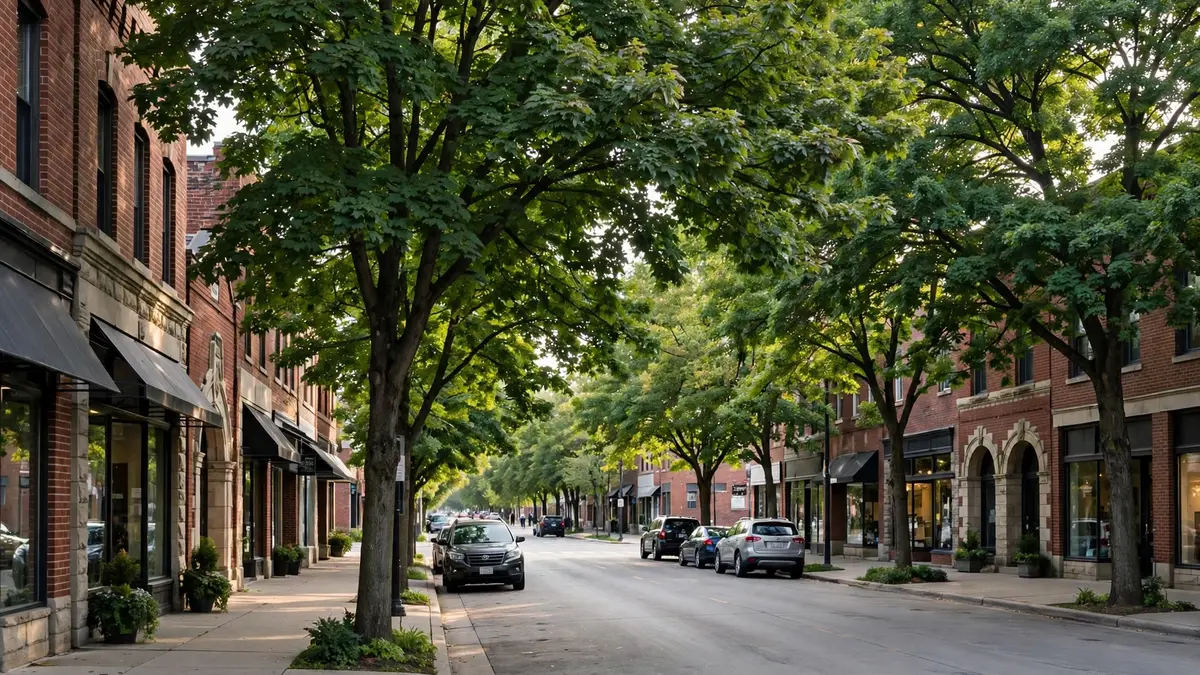
The 630 area code covers the near and far western suburbs of Chicago. Its heart is DuPage County, where it serves the county seat of Wheaton and larger suburbs such as Naperville, Aurora, Downers Grove, Elmhurst, Lombard and Glen Ellyn. To the north-west it reaches into a small part of Cook County, including parts of Schaumburg, Streamwood and Hanover Park, and to the west it runs into Kane County, covering the southern part of the Fox Valley around Aurora, St. Charles, Batavia and Geneva. Smaller parts of Will and Kendall counties sit inside the area as well.
What 630 does not cover is just as useful to know. It is not a code for Chicago itself: the city uses 312, 773 and 872. It is not a code for the southern suburbs either, which kept 708, or for the northern suburbs, which took 847 in the same 1996 split. And despite the occasional mix-up, 630 is an Illinois code, not a code for anywhere else in the country. If someone tells you they are calling from a 630 number, they are telling you, in the ordinary run of things, that their number is registered in the western suburbs of Chicago.
How the 630 area code began
The story of 630 starts with the original area codes of 1947, when Illinois was divided into four numbering areas and Chicago and its suburbs shared the 312 code. As the suburbs grew, 312 ran short of numbers, and on 11 November 1989 the suburbs were given a code of their own: 708. For a few years 708 covered almost the whole suburban ring around Chicago, but growth did not slow down, and by the mid-1990s it too was running out of numbers.

The answer was a three-way split that took effect on 3 August 1996. The northern suburbs received the new 847 code, the western suburbs received 630, and 708 was left covering the southern and inner western suburbs closest to the city. It was a clean geographic division, and it gave the western suburbs an identity of their own: for the first time, a DuPage County number could be recognised at a glance. Eleven years later, demand had grown again, and on 7 October 2007 the 331 code was laid over the whole 630 territory as an overlay. From that day on, every local call in the area has needed ten digits.
What sharing the area with 331 means
An overlay sounds complicated, but the idea is simple: two area codes serve exactly the same place. A neighbour across the street may have a 331 number while yours starts with 630, and both of you are in the same area. New numbers are assigned from either code, and the older 630 code is often the one people ask for, because it has been the local code for far longer and feels more established.
The practical effect is mostly about dialling. Since the overlay began, callers in the area have had to dial all ten digits for local calls, including the area code, even when calling next door. That rule applies across the whole Chicago area, which is one of the largest local calling areas in the United States: with few exceptions, no long-distance charge applies when calling from one part of the metro area to another. Your existing number did not change when 331 arrived, and it will not change if another code is added in the future. Overlays add numbers; they do not take them away.
630 area code at a glance
The table below gives a quick picture of the main places inside the 630 area and what each one is known for.
| Town or city | County and position | Worth knowing |
|---|---|---|
| Naperville | DuPage and Will, western edge | One of the largest suburbs in the area |
| Aurora | Kane and DuPage, Fox Valley | Illinois’s second-largest city |
| Wheaton | DuPage, near the centre | The county seat of DuPage County |
| Downers Grove | DuPage, eastern side | A commuter suburb on the BNSF line |
| Elmhurst | DuPage, north-eastern side | Close to O’Hare and the city |
| St. Charles | Kane, on the Fox River | At the western edge of the area |
Missed calls from 630 numbers
A missed call from a 630 number usually means nothing more than that someone in the western suburbs tried to reach you. It might be a business, a school, a doctor’s surgery, a delivery driver, or simply a wrong number. The code tells you where the number is registered, and nothing else. It does not tell you whether the caller is genuine, and it certainly does not tell you whether the call is safe to return.
That matters because unwanted callers can display almost any number they like, including a local one. The sensible habit is to let unknown calls go to voicemail and listen to the message before deciding. A genuine caller will usually leave one. If you do call back, use a number you find yourself, from an official website or a bill, rather than the number that called you. Never read out a security code, a password or bank details to someone who rang you unexpectedly, however local the number looks. If the calls keep coming, your phone’s blocking tools and your carrier’s call-filtering options are the right next step.
Moving to the western suburbs
If you are moving into the 630 area, the phone side of the move is straightforward. You can usually keep your existing number, whatever its code, and most people do: number portability means a move across the country does not have to mean a new number. If you do take a new line, it may be assigned a 630 number or a 331 number, depending on what is available when you sign up. Both work in exactly the same way, and nobody you call will be charged differently because of which one you hold.
For a business, the choice is worth a moment’s thought. A 630 number signals a long-established local presence, because the code has been associated with the western suburbs for decades, while a 331 number is newer and less familiar to some customers. Either way, the important thing is to update the number everywhere it appears: with your bank, your employer, your children’s school, and any service that sends you security codes by text. A number that is out of date in one account is the most common cause of a missed message.
Your 630 area code checklist
Use this list whenever a 630 number crosses your path.
- Remember the pairing: 630 means the western suburbs of Chicago, mainly DuPage County.
- Dial ten digits for every local call inside the 630 and 331 area.
- Treat 331 as the same place, not a different area: it overlays 630 exactly.
- Check the time zone before you ring: the area runs on Central Time.
- Let unknown 630 calls go to voicemail and listen before you call back.
- Never read out a security code or password to an unexpected caller.
- If you move within the area, ask your carrier to keep your number.
- Expect a new line to carry 331 if 630 numbers are in short supply.
- Update your number with your bank, employer and school when it changes.
- Tell family and work contacts which code your new number uses.
Frequently asked questions
Where is the 630 area code?
Area code 630 is in Illinois, covering the western suburbs of Chicago. Its core is DuPage County, with parts of Cook, Kane, Will and Kendall counties included. The main cities are Naperville, Aurora, Wheaton and Downers Grove.
What cities use area code 630?
The largest places in the 630 area are Naperville and Aurora, followed by Wheaton, Downers Grove, Elmhurst, Lombard, Glen Ellyn, Carol Stream, St. Charles, Batavia and Geneva. Dozens of smaller suburbs share the code as well.
When was area code 630 created?
Area code 630 was created on 3 August 1996, when the 708 area code was split three ways. The western suburbs took 630, the northern suburbs took 847, and the southern suburbs kept 708.
What is the difference between 630 and 331?
There is no geographic difference at all. Both codes cover exactly the same territory. The difference is age: 630 is the original code from 1996, while 331 is an overlay added on 7 October 2007 to provide more numbers in the same area.
Do I need to dial 1 before a 630 number?
Inside the 630 and 331 area, dial all ten digits of the number, including the area code, and no 1 is needed for local calls. From elsewhere in the United States, dial 1 followed by 630 and the seven-digit number. From abroad, dial your international prefix, then 1, then 630 and the number.
Is a call from a 630 number safe?
The area code alone cannot tell you that. A genuine local business and an unwanted caller can both display a 630 number. Let unknown calls go to voicemail, call back on a number you find yourself, and never share security codes or bank details with an unexpected caller.
The bottom line
The 630 area code is the mark of Chicago’s western suburbs: a code created in the 1996 split from 708, centred on DuPage County, and now sharing its ground with the 331 overlay. Dial ten digits, remember that 331 means the same place, and judge unknown callers by what they say rather than by the code they display. For more on how American area codes work, see our guide to the 205 area code, our notes on the 815 area code, and our guide to the 425 area code.