
The 434 area code is the telephone area code for south-central Virginia, covering a wide band of the state that runs from Charlottesville in the north, through Lynchburg, and down to Danville near the North Carolina line. If you have seen a missed call from a number starting with 434, or you are moving to the region and wondering what code your new number will carry, the short answer is that 434 is the code for Charlottesville, Lynchburg, Danville and the counties around them.
It is one of the younger area codes in Virginia. It was created on 1 June 2001, when the Richmond-based 804 area code was split in two, and it has covered the same territory ever since, with no second code layered over it. That makes it a straightforward code to understand: one region, one code, and a history that is easy to follow.
Key takeaways
- The 434 area code covers south-central Virginia, including Charlottesville, Lynchburg and Danville.
- It was created on 1 June 2001 in a split from the 804 area code.
- Lynchburg is the most populous city in the 434 area.
- It has no overlay, so 434 is the only code for the region.
- The whole area is on Eastern Time.
- Roanoke is not in 434; it uses the 540 area code.
Where the 434 area code is
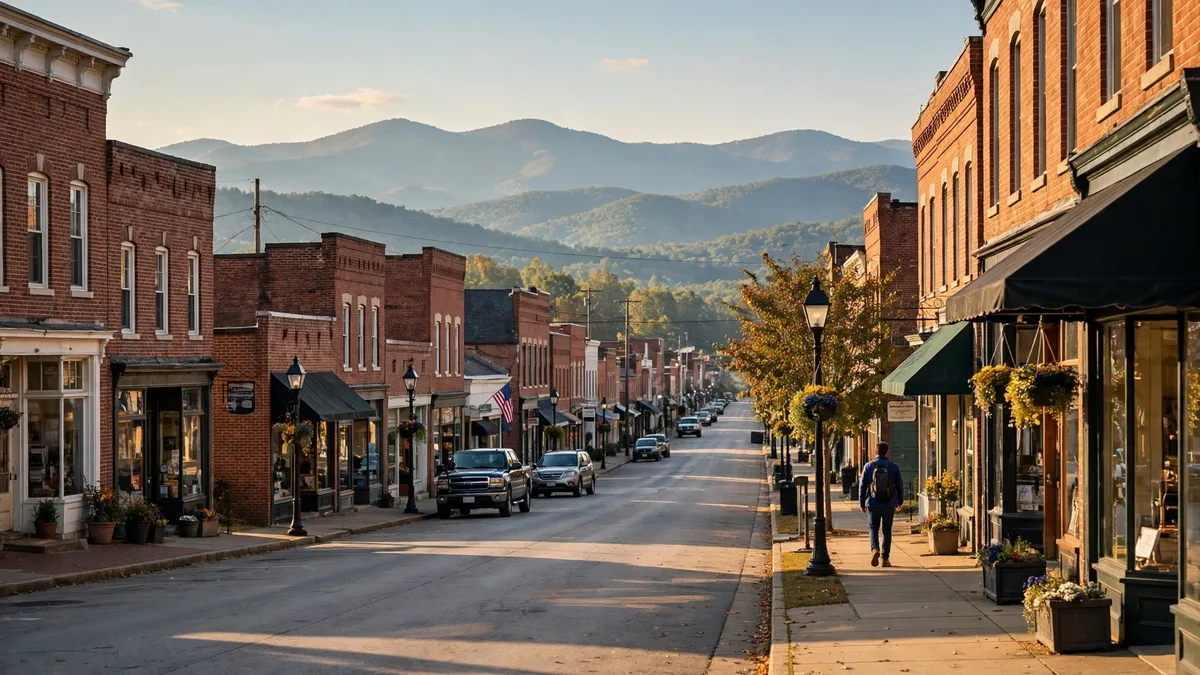
Area code 434 covers a large, mostly rural stretch of south-central Virginia. It starts at Charlottesville and Albemarle County in the foothills of the Blue Ridge Mountains, runs south-west through Nelson and Amherst counties to Lynchburg, and then covers the Southside counties along the North Carolina line, from Danville and Halifax east through Mecklenburg and Brunswick to Emporia. It is a big territory, much of it farmland and small towns, with a handful of cities anchoring it.
The region sits between several other codes. To the west and north is 540, which covers Roanoke, Harrisonburg and the Shenandoah Valley. To the east is 804, which covers Richmond and the capital region. To the south-west is 276, which covers the far south-west of the state, and to the south-east is 757, which covers the Hampton Roads coast. South of the state line, the neighbouring codes are in North Carolina.
One common point of confusion is Roanoke. Roanoke is the largest city in western Virginia, and people often assume it shares a code with Lynchburg, but it does not: Roanoke uses 540, with the 826 overlay. If you are driving west from Lynchburg towards Roanoke, you cross from 434 into 540 country well before you reach the city.
The cities and counties it covers
The main cities in the 434 area are Charlottesville, Lynchburg, Danville, South Boston and Emporia, with Farmville as another well-known town in the region. Lynchburg is the most populous city in the numbering plan area, and Charlottesville is the best known outside Virginia, as the home of the University of Virginia. Danville sits close to the North Carolina line, and South Boston and Emporia are smaller cities that serve the surrounding farming counties.
The counties in the area include Albemarle, Amherst, Appomattox, Brunswick, Buckingham, Campbell, Charlotte, Fluvanna, Greensville, Halifax, Lunenburg, Mecklenburg, Nelson, Nottoway, Pittsylvania and Prince Edward, among others. The full list is a long one, and the code reaches into more than twenty counties in total. The table below gives a short guide to the main places.
| Place | Where it sits | What it is known for |
|---|---|---|
| Charlottesville | Northern end of the 434 area | Home of the University of Virginia and Monticello |
| Lynchburg | Central 434, on the James River | The most populous city in the area code |
| Danville | Southern 434, near the North Carolina line | A former textile and tobacco city on the Dan River |
| South Boston | Southern 434, in Halifax County | A small city serving the Southside farming region |
| Emporia | Eastern edge of the 434 area | A small city on the road between Richmond and North Carolina |
| Farmville | Central 434, in Prince Edward County | Home of Longwood University, with Hampden-Sydney College nearby |
How the 434 area code came to be
Before 2001, the whole of this region used the 804 area code, which was centred on Richmond. By the late 1990s, that code was running out of numbers. Mobile phones were spreading quickly, fax machines and internet connections were taking up lines, and the supply of new numbers was expected to run out by the spring of 2002. The Virginia State Corporation Commission, which regulates telephones in the state, decided to split the region rather than add a second code on top of it.
The split was announced in December 2000. Richmond and its immediate suburbs kept 804, and the western and southern part of the old 804 territory became the new 434. The new code went into effect on 1 June 2001. For a few months, callers could use either 804 or 434 to reach numbers in the region, a period known as permissive dialling. After 15 January 2002, the correct code became mandatory, and a call dialled with the wrong one would not go through.
The split was not popular with everyone at the time. Businesses in Charlottesville and Lynchburg had to reprint stationery, change signs and update their advertising, and every household in the region had to learn a new code. But the split had one lasting advantage over the alternative, an overlay: because 434 was the only code for its territory, local callers could keep dialling seven digits for local calls, which an overlay would have ended.

Dialling in the 434 area
These days, the safe habit is to dial all ten digits, the area code plus the seven-digit number, for every call. That works for local calls and for calls to other area codes alike, and it is the habit most people have settled into. Older phones and older habits may still allow seven-digit dialling for some local calls, but ten digits is the reliable choice, and it is what your phone’s contacts should store.
For calls from outside the United States, the pattern is the same as for any American number: dial your country’s international access code, then 1 for the United States, then 434, then the seven-digit number. For calls from elsewhere in the United States, dial 1, then 434, then the number. There is nothing unusual about the pattern; 434 behaves like any other American area code.
One thing worth knowing is that the area code tells you where a number was first assigned, not where its owner is now. People keep their mobile numbers when they move, so a 434 number might belong to someone who left Virginia years ago. The code is a clue to a number’s origins, not a guarantee of where the caller is standing.
Neighbouring area codes
Virginia has a small set of area codes, and 434 sits in the middle of them. To the west and north, 540 covers Roanoke, Harrisonburg, Fredericksburg, Winchester and the Shenandoah Valley, with 826 as its overlay. To the east, 804 covers Richmond, Petersburg and the Northern Neck, with 686 as its overlay. To the south-west, 276 covers Bristol, Galax, Martinsville and the far south-west corner of the state. To the south-east, 757 covers Norfolk, Virginia Beach and the Hampton Roads coast, with 948 as its overlay.
That geography is useful when you are reading a number you do not recognise. A 540 number is likely to be from the Valley or from Roanoke, an 804 number from Richmond, a 757 number from the coast, and a 276 number from the far south-west. A 434 number, by contrast, points to the Charlottesville and Lynchburg corridor or to the Southside counties.
Missed calls and scams
Most calls from a 434 number are ordinary calls from ordinary people and businesses in south-central Virginia. But like every area code, 434 numbers can be faked by scammers, a trick known as spoofing, in which the number shown on your phone is not the number the call really came from. A familiar-looking area code is no guarantee that a call is genuine.
The practical rules are the same as anywhere else. Do not share personal details, passwords or payment information with an unexpected caller, however official they sound. If a caller claims to be from a bank, a government office or a utility company and asks for money or information, hang up and call the organisation back on a number you already trust. If you do not recognise a number, let it go to voicemail and call back only if the message gives you a good reason to.
Your 434 area code checklist
Use this list if you are moving to the region, getting a new number, or checking a call.
- Know that 434 covers south-central Virginia, including Charlottesville, Lynchburg and Danville.
- Remember that the code began on 1 June 2001, split from 804.
- Do not expect Roanoke to be in 434; it uses 540.
- Dial all ten digits for every call; it always works.
- Store new contacts with the full ten-digit number.
- Remember the whole area is on Eastern Time.
- Know that a 434 number shows where it was first assigned, not where the caller is now.
- Let unknown numbers go to voicemail and call back only with good reason.
- Never share personal or payment details with an unexpected caller.
- Call an organisation back on a number you trust if a caller claims to be from it.
Frequently asked questions
Where is the 434 area code?
Area code 434 is in south-central Virginia. It covers Charlottesville, Lynchburg, Danville, South Boston and Emporia, and the counties around them, running from the Blue Ridge foothills in the north to the North Carolina line in the south.
When was the 434 area code created?
It was created on 1 June 2001, in a split from the 804 area code, after 804 was expected to run out of numbers. Callers could use either code for a few months, and the correct code became mandatory after 15 January 2002.
What is the biggest city in the 434 area code?
Lynchburg is the most populous city in the 434 area. Charlottesville is the best known outside Virginia, as the home of the University of Virginia and Monticello.
Is Roanoke in the 434 area code?
No. Roanoke uses the 540 area code, with the 826 overlay. It is a common mistake, because Roanoke is the largest city in western Virginia and sits not far from Lynchburg, but the two cities use different codes.
Does the 434 area code have an overlay?
No. 434 has stood alone since it was created in 2001, with no second code layered over its territory. That is one reason the 2001 split was chosen instead of an overlay.
What time zone is the 434 area code in?
The whole 434 area is on Eastern Time, the same as the rest of Virginia. Clocks move forward in spring and back in autumn, in line with daylight saving time.
The bottom line
The 434 area code is the code for south-central Virginia: Charlottesville and the University of Virginia in the north, Lynchburg in the middle, Danville and the Southside counties in the south, all on Eastern Time, all under a single code that has stood alone since 1 June 2001. If a 434 number calls, it most likely belongs to someone in that region, and if you are moving there, it is the code your new number will carry. Just remember that Roanoke is not part of it, and that ten digits is the safe way to dial. For more on life in a small American town, see our date ideas, our guide to the best dog breeds for families, and our eco-friendly lifestyle tips.