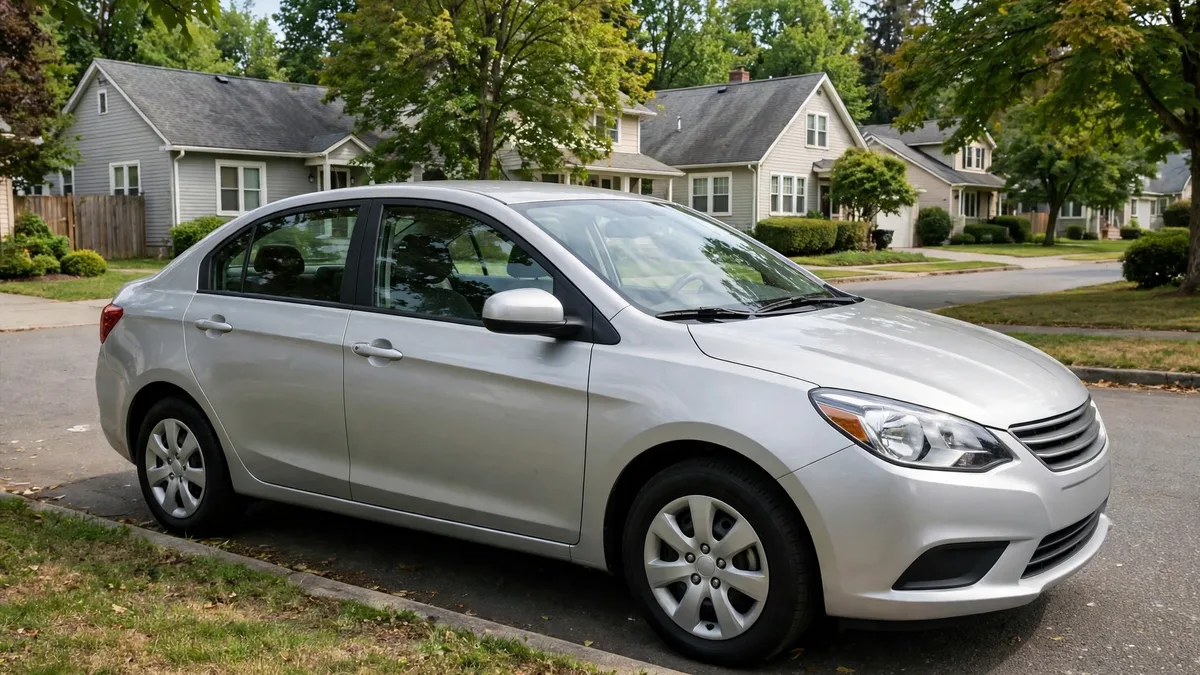

A Toyota Corolla for sale is one of the most common used-car listings you will find, and that is no accident: the Corolla has been one of the world’s best-selling cars for decades. The central question for a buyer is simple: how do you tell a good one from a tired one? You check its history, you inspect the body and the cabin, you drive it properly, and you have it looked over by an independent mechanic before money changes hands.
The Corolla first appeared in 1966, and it has been built in many generations since, as a small family car that puts reliability and low running costs ahead of speed or luxury. That history is exactly why so many are for sale at any time, and why the buying process rewards patience.
Key takeaways
- The Toyota Corolla has been in production since 1966 and is one of the world’s best-selling cars, so used examples are plentiful.
- Recent Corollas come as a sedan or a hatchback, and a hybrid version is available in many markets.
- Always check a used car’s history, including past accidents, outstanding finance and whether it has been reported stolen.
- Inspect the body for rust and uneven panels, the tyres for wear, and the cabin for warning lights and worn controls.
- A proper test drive should cover town streets, a faster road and a car park, with the radio off so you can listen to the car.
- An independent pre-purchase inspection is the best money a buyer can spend, and a seller who refuses one is a warning sign.
Why the Corolla is such a common choice
Buyers return to the Corolla for three reasons, and they have stayed the same across generations. The first is reliability: the car has a long-standing reputation for starting every morning and needing little beyond routine servicing. The second is running costs: it is a compact car with a modest engine, so fuel use, insurance and servicing are generally lower than for larger cars. The third is practicality: it seats four adults in comfort, carries a family shop, and is easy to park in a town.
None of that makes every used Corolla a good buy. A car that is cheap to run can still be expensive if it has been neglected, and a popular model attracts sellers of every kind, from careful owners to traders who have done the minimum. The model’s reputation is a reason to consider it, not a reason to skip the checks. The rest of this guide is about those checks, in the order that matters.
Sedan, hatchback and hybrid
The modern Corolla is sold in two main body styles. The sedan is the traditional four-door version, with a separate boot, and it is the shape most people picture when they hear the name. The hatchback is shorter, with a rear door that opens into the luggage area, which makes loading bulky items easier and suits drivers who value a compact footprint. Neither is better in any absolute sense; the choice depends on whether you carry passengers in the back seat often or load large items through the rear.
A hybrid version is also available in many markets, pairing a petrol engine with an electric motor. Hybrids tend to use less fuel in town driving, where the electric motor does more of the work, and they suit drivers who spend much of their time in traffic. They have a battery pack as well as an engine, so a buyer should ask about the battery’s condition and any hybrid-system warnings, just as they would ask about the engine. In recent model years, Toyota’s driver-assistance package, sold under the name Toyota Safety Sense, has been standard or widely available, bringing features such as automatic emergency braking and lane-keeping assistance to a car of this size.
Trims in general terms
Trim levels vary by model year and by market, so the names on a listing should be read as a guide to equipment rather than as a fixed ladder. In recent model years, the range has typically run from a well-equipped base trim through a sportier mid-level version to a better-equipped top trim, with names along the lines of LE, SE, XLE and XSE in some markets. The exact names and equipment differ between countries and years, so a buyer should check what a particular car actually has, rather than assuming from the badge.
As a rule, the differences between trims are equipment, not engineering. A higher trim usually adds larger wheels, a better sound system, heated seats or a sunroof, while the engine and the basic structure stay the same. That means a lower trim with a full service history is often a better buy than a higher trim that has been neglected.

What to check before you buy
The table below summarises the checks that matter most, in the order you would do them on a viewing.
| Area to check | What to look for | Walk away if |
|---|---|---|
| History | Service records, past accidents, outstanding finance, stolen marker | The seller cannot show records or the history report raises flags |
| Bodywork | Even panel gaps, matching paint, no rust on arches and sills | Panels are mismatched or rust has broken through |
| Tyres and brakes | Even tread wear, matching tyres, firm brake pedal | Tyres are bald or mismatched, or the pedal feels spongy |
| Engine bay | Clean fluids, no leaks, no warning lights on the dashboard | Oil looks milky, coolant is low, or warning lights stay on |
| Cabin | Seats, controls and electronics all work, no damp smell | Electrics fail, the cabin smells of damp, or the airbags look tampered with |
| Test drive | Smooth gear changes, straight steering, no odd noises | The car pulls to one side, grinds, or hesitates under acceleration |
The buying process, step by step
Start by deciding your budget and your must-haves before you look at a single listing. A must-have list might include the body style, a hybrid engine or a manual gearbox; everything else is a preference. Then search widely, compare several cars of a similar age and mileage, and be suspicious of any listing that is far cheaper than the rest, since a price that looks too good usually has a reason behind it.
When you find a car worth seeing, ask the seller for its history before you travel: the service records, the number of previous owners, and whether anything has been replaced. A careful owner will have answers; a vague seller is a warning. At the viewing, walk around the car slowly, check the panels and the tyres, sit inside and try every switch, and look under the bonnet for leaks and for the condition of the fluids. Then drive it with the radio off, on town streets and on a faster road, listening for noises and feeling for anything that pulls, grinds or hesitates.
Before you agree to buy, arrange an independent pre-purchase inspection. A mechanic will put the car on a lift, check the underside for rust and damage, and read any fault codes, and the fee is small beside the cost of a car. If the seller refuses an inspection, walk away. Finally, check the paperwork: the registration document, the service book, the keys, and any proof that outstanding finance has been settled. Never pay in full until the paperwork is in order and you have the keys in your hand.
Common mistakes to avoid
The most common mistake is falling for the first car you see. The Corolla is plentiful, and a better example usually appears within a week, so there is rarely a reason to rush. The second mistake is buying on looks: a polished body can hide worn tyres, a tired battery and overdue servicing. The third is skipping the inspection to save a small fee, which is the most expensive saving in car buying.
Another mistake is ignoring the running costs. Insurance, road tax where it applies, servicing and tyres vary with the version you choose, and a sportier trim with larger wheels will usually cost more to insure and to keep in tyres than a base model. Ask for an insurance quote on the exact car before you buy, not after. Finally, do not let a seller hurry you: a good car will still be a good car tomorrow.
Your Toyota Corolla buying checklist
Take this list to every viewing.
- Decide your budget and your must-haves before you look at any listing.
- Compare several cars of a similar age and mileage, and question any listing far cheaper than the rest.
- Ask for the service history, the number of previous owners and any accident history before you travel.
- Check the body for rust, uneven panel gaps and mismatched paint.
- Check the tyres for even wear and the brakes for a firm pedal.
- Look under the bonnet for leaks, and check the oil and coolant.
- Try every switch, light and electronic feature in the cabin.
- Test drive on town streets, a faster road and into a car park, with the radio off.
- Arrange an independent pre-purchase inspection before you agree to buy.
- Check the registration document, service book, keys and finance status before you pay in full.
Frequently asked questions
Is a Toyota Corolla a good first car?
For many buyers, yes. It is compact and easy to park, its running costs are generally modest, and it has a long-standing reputation for reliability. A first-time buyer should still follow the same checks as anyone else: history, condition, a proper test drive and an independent inspection.
Should I buy a Corolla sedan or a hatchback?
It depends on how you use the car. The sedan has a separate boot and suits drivers who carry passengers in the back seat. The hatchback is shorter and its rear door makes loading bulky items easier. Drive both if you can, and choose the shape that fits your daily life rather than the one that looks better in photographs.
Is a hybrid Corolla worth considering?
A hybrid suits drivers who spend much of their time in town traffic, where the electric motor does more of the work and fuel use tends to be lower. Ask about the battery’s condition and any hybrid-system warnings, and remember that the same checks on body, history and servicing apply to a hybrid as to any other used car.
How many miles is too many for a used Corolla?
There is no single number. A car with a high mileage and a full service history can be a better buy than a low-mileage car that has been neglected. Condition, servicing and the results of an independent inspection matter more than the reading on the odometer alone.
What should I do if the seller will not allow an inspection?
Walk away. A seller with nothing to hide has no reason to refuse an independent inspection, and the fee is small beside the cost of the car. There are many Corollas for sale, and another one will appear soon.
Do I need to check for outstanding finance on a used car?
Yes. A car bought with outstanding finance can still belong to the finance company, which can create serious problems for the new owner. A history check will show whether finance is outstanding, and you should confirm it is settled before you pay.
The bottom line
A Toyota Corolla for sale is a sensible place to start a used-car search: the model is plentiful, practical and well proven. The buying itself is where the care belongs. Compare several cars, check the history, inspect the body and the cabin, drive it properly, and pay for an independent inspection before you pay for the car. For more on choosing well and living well, see our eco-friendly lifestyle tips, our advice on how to stay young, and our guide to the best dog breeds for families.