
How much do dentures cost is a question with no single answer, because the price depends on the type of denture, the materials used, how many fittings are needed, and where you have the work done. A basic full denture and a precision-made implant-retained denture can differ enormously in cost, and both can be the right choice for different people. What matters is understanding what you are paying for, so you can compare quotes fairly and avoid surprises.
This guide explains the main types of dentures, the factors that move the price, and the questions to ask before you agree to treatment. It gives general information only and is not medical advice. For advice about your own mouth, speak to a qualified dentist who can examine you and recommend the options that fit your needs and budget.
Key takeaways
- Full, partial, immediate and implant-retained dentures all cost different amounts.
- Materials, fittings, relines and aftercare all affect the final bill.
- NHS and private routes differ in cost, choice and waiting time.
- A quote should itemise the denture, fittings, adjustments and reviews.
- Cheap dentures can cost more later if they fit badly or break.
- Always ask about guarantees, adjustments and replacement costs.
What dentures are
Dentures are removable replacements for missing teeth and the surrounding gum tissue. A full denture replaces all the teeth in an upper or lower arch, while a partial denture fills gaps where some natural teeth remain. They are made to order for your mouth, usually from acrylic, sometimes with a metal framework, and shaped and coloured to look as natural as possible.
Getting dentures takes several appointments. The dentist takes impressions of your mouth, records how your jaws meet, and fits trial versions so you can check the look and the bite before the final denture is made. After fitting, a few adjustment visits are normal, because even a well-made denture can rub in places that only show up once you start eating and speaking with it.
Modern dentures are far better than the stereotypes. They can restore chewing, support the shape of the face, and improve speech after tooth loss. They do need daily care and regular review, and they will need relining or replacing over the years as the shape of your gums and jaw changes.
Types of dentures
Full dentures. A complete set for one arch, held in place by suction and the shape of the gums. They are the most affordable option and involve no surgery, but they can move when eating and may need adhesive for confidence, particularly on the lower jaw.
Partial dentures. These replace one or a few missing teeth and clip onto the remaining natural teeth, usually with a metal or flexible plastic framework. They are less extensive than a full set and can be a good option when most of your teeth are still healthy.
Immediate dentures. Fitted on the same day teeth are removed, so you are never without teeth. They need more adjustments afterwards, because the gums change shape as they heal, and a reline or a new denture is often needed within months.
Implant-retained dentures. These clip onto two or more implants placed in the jaw, which holds them firmly in place and improves chewing. They cost considerably more because of the surgery and the implants, but many wearers find the stability worth it.
Flexible and premium dentures. Some dentures use flexible nylon bases or higher-grade teeth and gum shading for a more natural look and a softer feel. These cost more than standard acrylic, and the benefit is mostly comfort and appearance rather than function.
What affects the cost
Type and materials. The biggest single factor is the type of denture. A standard acrylic full denture is the least expensive, while implant-retained and premium designs cost more. The teeth themselves vary too, from basic acrylic to layered porcelain-style teeth that look more natural and resist wear better.
Number of fittings. A straightforward case may need three or four appointments, while a complex bite, a strong gag reflex, or a healed jaw that has changed shape can need more. Each fitting and adjustment takes clinical time, and that time is part of the fee.
Extractions and preparation. If teeth still need to be removed, or the gums need treatment before impressions, that work is charged separately. Some people also need a reline soon after fitting, as the gums settle, which should be discussed at the start rather than discovered later.
Clinic and location. Fees vary between clinics and regions, reflecting rent, staffing and laboratory costs. A denture made by a skilled local laboratory with several try-in stages will usually cost more than one made quickly with fewer checks, but it is also more likely to fit well first time.
Aftercare and replacements. Dentures wear out. Teeth flatten, the base loosens as the jaw changes, and repairs or relines are needed every few years. A quote that includes a year of adjustments and a clear policy on repairs is better value than a cheaper one that charges for every visit.
NHS and private care in general terms
In the UK, dentures are available on the NHS, where charges are set in bands and the fee covers the denture and the related appointments within a course of treatment. NHS dentures are made to a good clinical standard, but the choice of materials and teeth may be more limited than privately, and waiting times can be longer.
Private care usually offers more choice: a wider range of tooth shapes and shades, premium materials, more try-in appointments, and faster scheduling. The price is set by the clinic, so it varies more, and it is worth asking exactly what the fee includes, how many adjustments are covered, and what a reline or repair would cost later.
Some people mix the two routes, for example having extractions on the NHS and a private denture, but rules and availability vary, so ask your dentist what is possible in your area. Dental insurance or payment plans can also spread the cost, but read the terms carefully, as some plans cover only part of the fee.
Questions to ask before you agree
Ask which type of denture is being recommended and why, what materials will be used, and how many appointments are included. Ask what happens if the denture rubs or does not fit well, how many adjustments are covered, and what a reline would cost. A written estimate with these items listed makes comparison between clinics straightforward.
Ask about the laboratory. Dentures made locally, with the dentist and the technician working together, often fit better than those sent far away with little communication. Ask whether you will see a trial denture before the final one is made, because changes are easy then and costly later.
Ask about daily life with the denture: how to clean it, what to avoid eating at first, how long to wear it each day, and when to come back for a review. Good aftercare advice is part of what you are paying for, and a dentist who explains it properly is a sign of a careful practice.
Looking after dentures and your budget
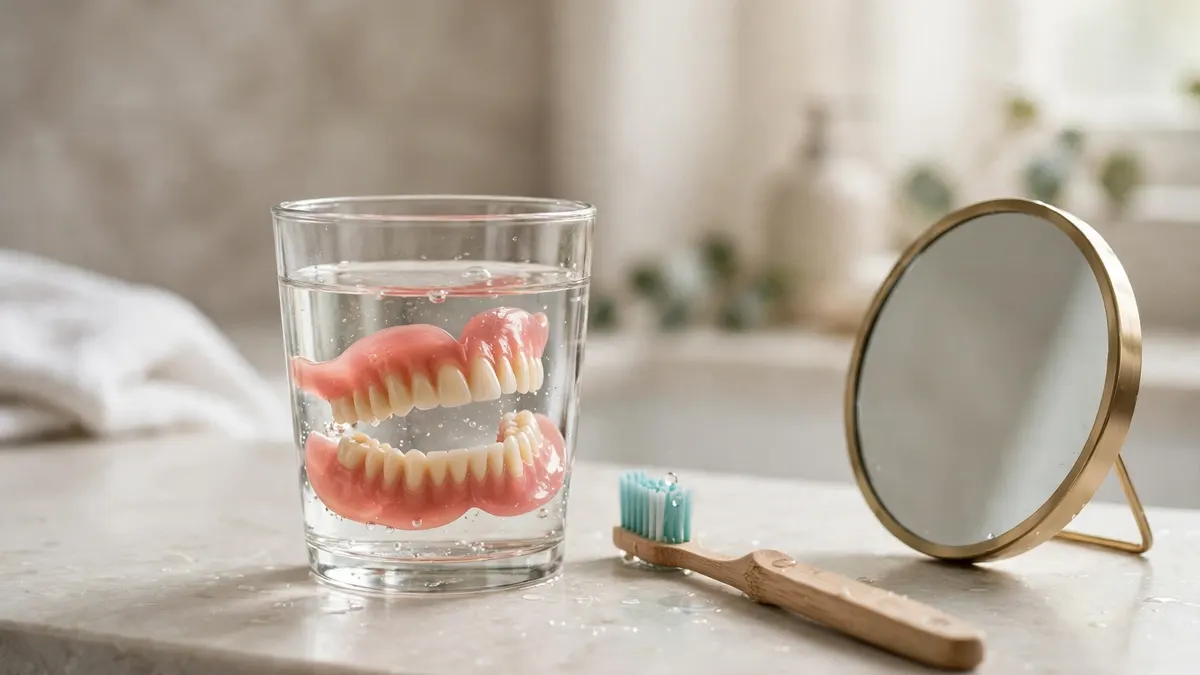
Daily care keeps dentures working longer and protects the gums underneath. Brush the denture daily with a soft brush and a non-abrasive cleaner, rinse it after meals, and soak it overnight in water or a cleaning solution as advised. Never use hot water, which can warp the base, and never use household bleach or abrasive pastes.
See your dentist regularly even if the denture feels fine. Gums and bone change shape over time, and a loose denture can sore the mouth and make chewing harder. A reline, where the fitting surface is renewed, is cheaper than a new denture, but there comes a point where replacement is the better option.
Budget for the long term. A denture is not a one-off purchase: relines, repairs, cleaning products and eventual replacement are part of the real cost. Setting aside a small amount each year avoids a sudden large bill when the denture finally wears out.

Denture types compared
The table below compares the main denture types, so you can see the trade-offs between cost, stability and surgery at a glance.
| Denture type | How it stays in place | Cost level |
|---|---|---|
| Full denture | Suction and gum shape | Lowest |
| Partial denture | Clasps on natural teeth | Low to moderate |
| Immediate denture | Suction, fitted same day | Low to moderate |
| Flexible denture | Flexible base, clasps | Moderate |
| Premium denture | Suction, finer materials | Moderate to high |
| Implant-retained | Clips onto implants | Highest |
Your dentures checklist
- Ask your dentist which denture type suits your mouth and budget.
- Get a written estimate listing the denture, fittings and adjustments.
- Ask how many appointments and adjustments are included.
- Check whether a trial denture is fitted before the final one.
- Ask about materials, tooth shade and the laboratory used.
- Find out what a reline or repair would cost.
- Ask about NHS and private options and what each covers.
- Plan for regular reviews even when the denture feels fine.
- Learn the daily cleaning routine before you leave.
- Budget for relines, repairs and eventual replacement.
Frequently asked questions
How long do dentures last?
A well-made denture typically lasts five to ten years, depending on the materials, how it is cared for, and how much the shape of your gums changes. The teeth wear and the base loosens over time, so regular reviews and relines extend its life, but replacement is eventually needed.
Do dentures hurt when you first get them?
Some soreness is normal in the first days, as the mouth adjusts to a new shape. Most sore spots are fixed with a small adjustment at a review appointment. If pain persists, or the denture causes ulcers, go back to your dentist rather than trying to adjust it yourself.
Can you eat normally with dentures?
Yes, although it takes practice. Start with soft foods cut into small pieces, chew on both sides, and build up to firmer foods over a few weeks. Very hard or sticky foods need care, and implant-retained dentures generally allow a wider diet than conventional full dentures.
How do I clean dentures properly?
Brush the denture daily with a soft brush and a non-abrasive denture cleaner, rinse after meals, and soak overnight in water or a cleaning solution as advised by your dentist. Clean your gums and tongue daily too, and never use hot water or household bleach on the denture.
Will dentures change how I speak?
Speech can feel different at first, and some sounds may take practice. Reading aloud for a few minutes a day usually helps the mouth adapt within a couple of weeks. If speech problems persist, your dentist can check the fit and the position of the teeth.
Are implant-retained dentures worth the extra cost?
For many people, yes: they stay firmly in place, improve chewing and confidence, and reduce the sore spots that loose dentures can cause. They cost considerably more and involve surgery, so the decision depends on your health, your budget and how much the stability matters to you.
The bottom line
How much do dentures cost comes down to the type you need, the materials, the number of fittings and the aftercare included. A basic full denture is the most affordable route, while implant-retained and premium designs cost more but offer greater stability and comfort. Get a written, itemised estimate, ask about adjustments and future relines, and choose the option that fits your mouth and your budget rather than the cheapest headline figure. For related reading, see our guides on finding a comfortable dental practice, what to expect from professional teeth cleaning, and eating healthier with cooked vegetables.
Please note: this article gives general information only and is not medical advice. Always consult a qualified dentist about your own dental health before making treatment decisions.