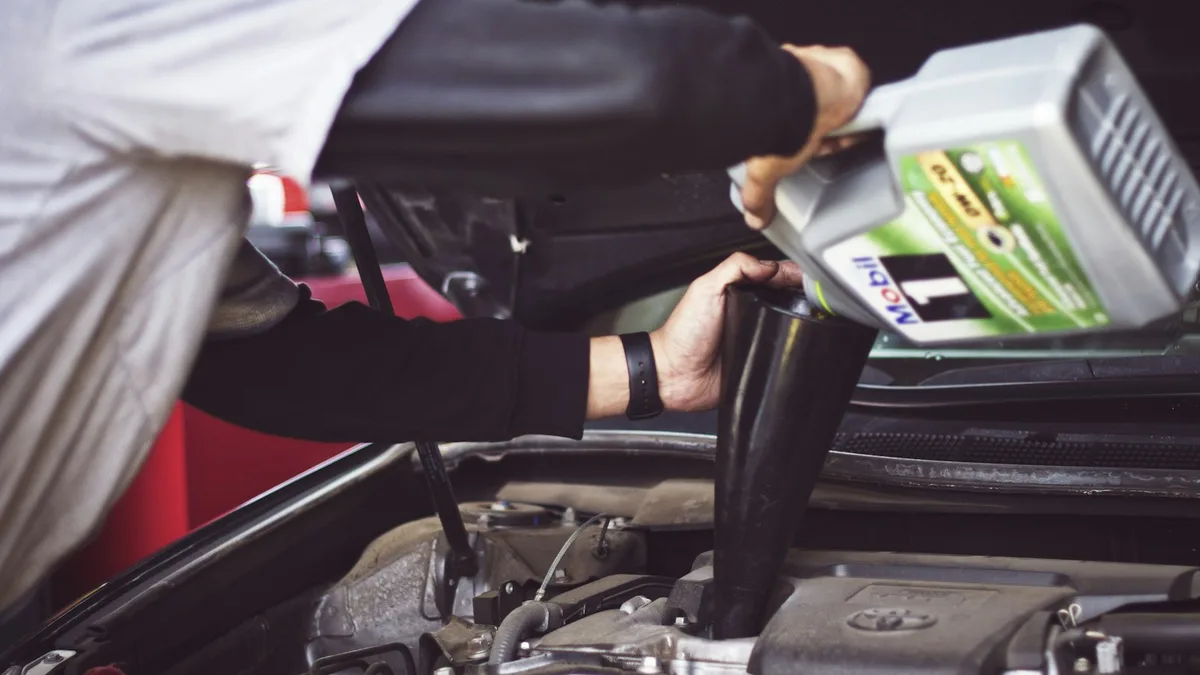

How to check car fluids is a skill every driver should have, because it takes under ten minutes, needs no tools beyond a clean rag, and can catch a small problem before it becomes a large repair bill. The six fluids to check are engine oil, coolant, brake fluid, transmission fluid, power steering fluid and windscreen washer fluid, and each one has a dipstick or a marked reservoir that tells you, at a glance, whether the level is right.
The routine is simple once you know where to look: park on level ground, let the engine cool, then work through the fluids one by one, checking the level against the marked range and noting the colour. Your owner’s manual shows the exact locations for your car and the correct fluid types, and it is the final word whenever this guide and your manual disagree.
Key takeaways
- Check all six fluids — oil, coolant, brake, transmission, power steering and washer — about once a month.
- Park on level ground and let the engine cool before checking, except for transmission fluid where the manual may say warm.
- Levels should sit between the minimum and maximum marks; colour and smell matter as much as level.
- Healthy engine oil is amber and smooth; healthy transmission fluid is translucent red.
- Never open a hot coolant reservoir, and never mix fluid types your manual does not approve.
- A level that keeps dropping points to a leak or wear, and it deserves a mechanic’s look.
Before you open the bonnet
A few minutes of preparation makes the checks accurate. Park on flat, level ground, switch the engine off, and give it at least five to ten minutes to cool so the oil can drain back into the sump and the coolant pressure can fall. A hot engine gives false readings, and a pressurised cooling system can scald. Keep a clean white rag or paper towel to hand: white shows the true colour of each fluid, which is half the diagnosis.
Open the bonnet and take a slow look around before touching anything. You are looking for the dipsticks, usually with bright yellow or orange handles, and the translucent reservoirs with minimum and maximum lines moulded into their sides. If you cannot identify a reservoir with confidence, check the diagram in your owner’s manual rather than guessing.
Engine oil: the most important check
Engine oil lubricates moving parts, carries heat away, and traps the fine particles that wear produces, so its level and condition say more about your engine’s health than any other fluid. Find the oil dipstick, pull it out, and wipe it clean with your rag. Push it fully back in, then pull it out again and read the level: the film of oil should fall between the minimum and maximum marks.
Fresh oil is amber and smooth between your fingers. Oil that is dark brown or black has simply been doing its job for a while, and on its own that is not a cause for alarm, but gritty particles, a milky colour, or a strong smell of fuel are warning signs worth a mechanic’s opinion. If the level sits at or below the minimum mark, add the grade your manual specifies, a little at a time, rechecking as you go so you do not overfill.
How often to check the oil
Once a month is a sensible rhythm for most drivers, and more often if your car is older, uses oil, or has just come back from a long trip. Checking takes a minute, and it is the check most likely to save you from serious damage: an engine run low on oil wears fast and can fail without much warning. If you find yourself topping up often, note how much and how often, because that record helps a mechanic find the cause.
Coolant: keeping the temperature steady
Coolant, also called antifreeze, stops the engine freezing in winter, raises the boiling point in summer, and protects the cooling system against rust. Find the translucent expansion tank near the radiator, with minimum and maximum lines on its side, and check the level only when the engine is completely cool. The fluid should sit between the two marks.
Never remove the cap from a hot cooling system: the contents are pressurised and can cause severe burns. If the level is low, top up with the coolant type your manual specifies, usually mixed with distilled water, and never mix different coolant types without checking they are compatible. A level that falls again soon after topping up usually means a leak.
Brake fluid and power steering fluid
Brake fluid lives in a reservoir on top of the master cylinder, usually at the rear of the engine bay on the driver’s side. Most reservoirs are translucent, with upper and lower marks moulded in, so you can read the level without removing the cap. Brake fluid absorbs moisture from the air over time, so keep the cap on except when you must open it, and if the fluid looks very dark, ask a mechanic whether a change is due.
A brake fluid level near or below the lower mark deserves prompt attention, because it can mean worn brake pads or a leak. Power steering fluid is checked in a similar way: find its reservoir, often marked with a steering wheel symbol, and check the level against its marks. Some cars have a dipstick built into the cap; wipe it, replace it fully, and read it again. Low or dark power steering fluid can make steering heavy or noisy.

Transmission fluid: read the manual first
Transmission fluid is the one check where cars differ most. Many automatics have a dipstick, and the usual method is to warm the engine, park on level ground, keep the engine idling with the transmission in Park or Neutral as your manual directs, then pull the dipstick, wipe it, reinsert it fully, and read the level against its marks. Healthy fluid is translucent red and smooth, with a slightly sweet smell.
Dark brown fluid, a burnt smell, or particles in the fluid all suggest the transmission needs professional attention rather than a top-up. Many modern cars have sealed transmissions with no dipstick at all, and those cannot be checked at home; the level is set by the manufacturer and checked with specialist equipment. If your car has no dipstick, do not go hunting for one — follow the service schedule in your manual instead.
Manual gearboxes and clutch fluid
Manual gearboxes usually have no dipstick either, and their fluid is checked during servicing. Some cars have a separate clutch fluid reservoir, often sharing fluid with the brake system, and its level can be read from the marks on its reservoir. As with everything under the bonnet, the manual is the guide: it tells you which fluids your car has, where they live, and what to use.
Windscreen washer fluid: the easy one
Washer fluid is the simplest check of all, and the one most often forgotten until a dirty windscreen proves the point. Find the reservoir, marked with a windscreen symbol on its cap, and check the level by looking through the translucent plastic or lifting the cap. Top it up with washer fluid or a suitable screenwash mixture, especially before winter, when road spray and salt make a clear windscreen a safety matter rather than a convenience.
Plain water works in a pinch, but it freezes in cold weather and does nothing for the greasy film that builds up on glass. A proper screenwash additive cleans better and protects the system. While you are there, check the wiper blades: a blade that judders, streaks, or leaves unwiped bands is past its best.
Your monthly fluid-check checklist
Run through this list once a month, and again before a long journey, and the whole routine takes under ten minutes.
- Park on level ground, switch off, and wait five to ten minutes for the engine to cool.
- Check the engine oil with the dipstick: level between the marks, amber and smooth.
- Check the coolant in its expansion tank, cold only, between the minimum and maximum lines.
- Check the brake fluid reservoir level, and note if the fluid looks very dark.
- Check the transmission fluid if your car has a dipstick, following the manual’s warm or cold method.
- Check the power steering fluid level against its reservoir marks.
- Top up the windscreen washer fluid and check the wiper blades.
- Use only the fluid types and grades your owner’s manual specifies.
- Note any level that keeps dropping, and book a mechanic rather than topping up endlessly.
- Wipe up any spills, close every cap firmly, and wash your hands when you finish.
What each fluid tells you
| Fluid | Where to check | Healthy look | Warning sign | Check when |
|---|---|---|---|---|
| Engine oil | Dipstick | Amber, smooth | Gritty, milky, fuel smell | Monthly, engine cool |
| Coolant | Expansion tank | Clear, between marks | Level keeps falling | Monthly, engine cold |
| Brake fluid | Master cylinder reservoir | Pale, between marks | Very dark, low level | Monthly |
| Transmission | Dipstick, if fitted | Translucent red | Brown, burnt smell | As manual directs |
| Power steering | Marked reservoir | Clear, between marks | Dark, heavy steering | Monthly |
| Washer fluid | Marked reservoir | Full, clean | Empty, streaky screen | Monthly, before winter |
Frequently asked questions
How often should I check my car fluids?
About once a month is right for most drivers, and before any long journey. Check more often if your car is older, has a known leak, or uses oil between services.
Should the engine be hot or cold when I check fluids?
Cold, or at least cooled for five to ten minutes, for oil, coolant, brake and power steering fluid. Transmission fluid is the exception: many manuals ask for a warm engine at idle, so follow your manual.
What does milky engine oil mean?
Milky oil can mean condensation that has not burned off, often after many short trips, but it can also mean coolant leaking into the oil, which is serious. If it persists, have a mechanic check it.
Can I top up coolant with water?
In an emergency, a small amount of clean water is better than running low, but the system needs the correct coolant mixture for freeze, boil and corrosion protection. Top up properly as soon as you can.
Why does my brake fluid level keep dropping?
Brake fluid falls slowly as brake pads wear, which is normal, but a fast or repeated drop can mean a leak. Low brake fluid deserves a prompt inspection, because brakes are not a system to guess about.
My car has no transmission dipstick. Is that normal?
Yes. Many modern cars have sealed transmissions with no owner-accessible dipstick. The fluid level is checked with specialist equipment during servicing, so follow your manual’s service schedule.
The bottom line
How to check car fluids comes down to a monthly ten-minute habit: park level, let the engine cool, and work through oil, coolant, brake, transmission, power steering and washer fluid, reading levels against the marks and noting colour and condition. A calm morning makes the job easier, and our guide to the best single-serve coffee maker covers a quick coffee before you start, while our guide to the best water bottles covers keeping water handy in the car, and our guide to stress-relief techniques covers staying calm if you do find a problem.
Take care under the bonnet: never open a hot coolant reservoir, keep clear of moving parts, and leave anything you are unsure about to a qualified mechanic. A level that keeps dropping, or fluid that looks wrong, is a reason to book an inspection, not to keep topping up.