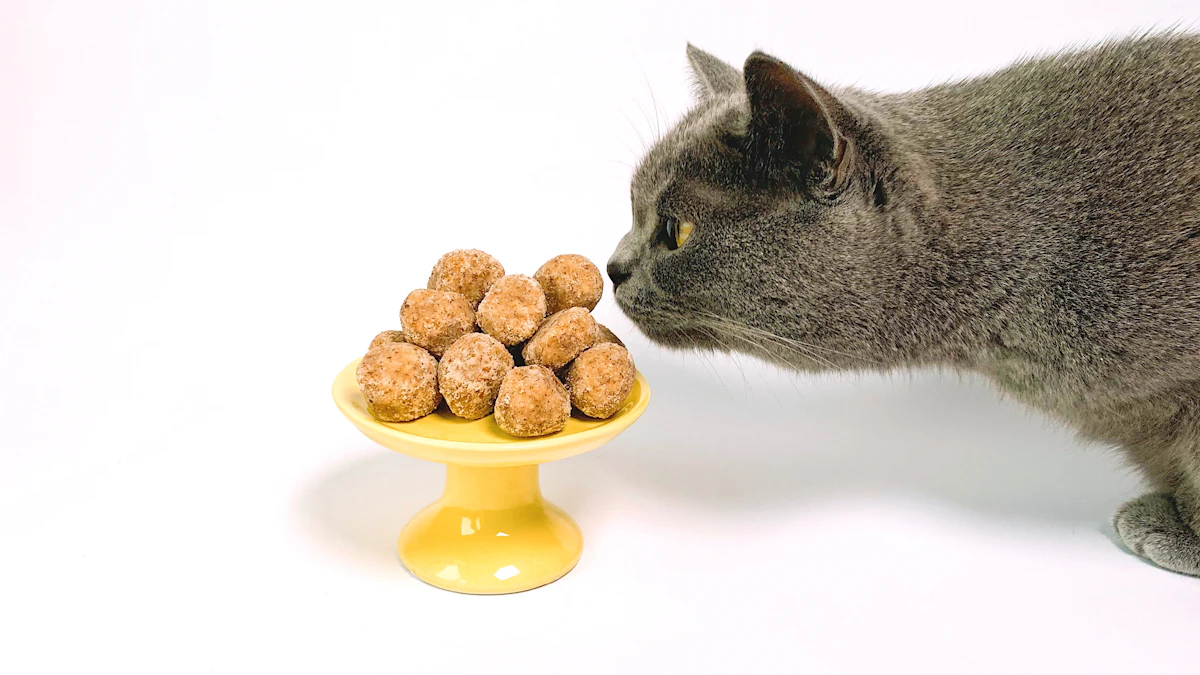

The best cat food brands are the makers that publish full nutritional information, test their recipes in feeding trials or against recognised nutrient profiles, and answer questions about where their food is made. What is the best cat food brands in 2027? There is no single winner, but the brands worth your money share the same habits: honest labels, named ingredients, qualified nutritionists on staff, and a record of acting quickly when something goes wrong.
Brand rankings usually tell you more about advertising budgets than about food, so this guide ranks nobody. Instead it shows you how to judge any brand yourself, across both wet and dry food, using the same checks a veterinary nutritionist would use: the adequacy statement, the ingredient list, the testing behind the recipe, and the company’s behaviour over time.
Key takeaways
- The best cat food brands share habits: honest labels, named ingredients, qualified nutritionists and quick action on recalls.
- Judge a brand on its adequacy statement, its testing and its transparency, not on its advertising.
- Wet and dry food from the same brand can differ sharply in quality, so judge each recipe on its own.
- Feeding trials are stronger evidence than formulation alone, but both beat a brand that publishes nothing.
- A brand that hides its factory, its nutritionist or its recall history is telling you something.
What a trustworthy brand looks like
A trustworthy brand starts with people. Look for a company that employs qualified veterinary nutritionists, ideally diplomates of the European or American colleges of veterinary nutrition, and says so on its website. A brand that cannot name the people who formulate its food is asking you to trust a logo instead of an expert, and that is a poor trade.
The second habit is openness about manufacturing. A good brand states where its food is made, whether it owns the factory or uses a contractor, and how it checks the quality of each batch. A brand that hides its factory behind vague words about heritage and craft is not necessarily making bad food, but it is making it harder for you to judge, and that should count against it.
Best for: owners who want confidence without guesswork — a brand that names its nutritionists and its factory, and publishes full nutritional information.
Wet food makers: what separates the good from the average
Wet food is where most brands show their true colours, because a tin cannot hide behind crunch and coating the way kibble can. The best wet food makers list a named meat or fish first, keep the recipe short, and state clearly whether the tin is a complete meal or a complementary topper. They also give the calorie content per tin, which many brands still omit, leaving owners to guess portions.
The average wet food maker does the opposite: a vague first ingredient, a long list of thickeners and colours, and a front label full of words such as gourmet and premium that carry no legal meaning.
Best for: owners who feed mainly wet food — a maker whose tins name the meat first, state the calories, and say plainly whether the tin is a complete meal.
Dry food makers: where quality hides
Dry food is harder to judge, because kibble is made by cooking ingredients under heat and pressure, and the process can mask thin recipes. The honest makers publish the nutrient profile of the finished kibble, not just the raw ingredients that went in, and they state the carbohydrate content or give enough figures for you to work it out. A maker that publishes only the minimum the law requires is not breaking rules, but it is not helping you either.
Watch the first ingredients with care. A kibble that lists fresh chicken first and then three different grains may contain less meat than a kibble that lists chicken meal first, because fresh meat is mostly water and loses most of its weight in cooking. Named meat meals high on the list are concentrated protein, which is a good sign.
Best for: owners who feed mainly kibble — a maker that publishes the finished nutrient profile and uses named meat meals high on the list.
Feeding trials or formulation: the testing question
Every complete cat food reaches the market by one of two routes. In formulation, the maker calculates that the recipe meets the nutrient profiles published by the Association of American Feed Control Officials, and the label says the food is formulated to meet those levels. In a feeding trial, the maker feeds the recipe to real cats under a standard protocol and shows that they stay healthy, and the label says feeding tests substantiate that the food provides complete and balanced nutrition.
Feeding trials are the stronger evidence, because they test the food as cats actually eat and digest it, rather than as numbers on a spreadsheet. That said, a trial is expensive, so small makers often use formulation alone, and a well-formulated recipe from a careful small maker can be better than a trialled recipe from a careless large one. Treat testing as one signal among several, and be wary of any brand that says nothing at all about how it checks its food.
Best for: owners who want the strongest evidence — a brand that runs feeding trials, or at least publishes full formulation data for every recipe.
Recalls and transparency: how brands behave when things go wrong
Every large food maker has faced a recall, and the recall itself is not the scandal: the scandal is how the company behaves afterwards. A good brand announces the problem quickly, names the affected batches, explains what went wrong, and tells owners exactly what to do. A poor brand stays quiet, blames suppliers, and leaves owners to find out from the news.
Before you commit to a brand, search its name alongside the word recall and read what comes up. One old recall handled well is a sign of a company that takes safety seriously, while a pattern of quiet withdrawals is a warning. Also check whether the brand publishes batch quality checks.
Best for: owners who want a brand they can trust for years — a maker with a clear recall record, quick announcements and published quality checks.
Marketing words that mean nothing, and the few that do
Pet food shelves are full of words that sound meaningful and mean nothing. Natural, premium, gourmet, holistic and human-grade have no fixed legal definition on a cat food label in most countries, and a brand can use them freely whatever is in the tin. Grain-free means only that the recipe contains no grain, not that it is healthier, and high-protein means nothing without a number beside it.
The words that do matter are the boring ones. Complete and balanced, with a named life stage, is a legal claim tied to nutrient profiles or feeding trials. The guaranteed analysis gives minimums for protein and fat, and the ingredient list names what is actually in the food. Learn to read past the adjectives on the front and spend your attention on the small print on the back, because that is where the food is described honestly.

| Signal | Good sign | Warning sign | Where to check |
|---|---|---|---|
| Nutrition staff | Named veterinary nutritionists | No one named at all | Brand website |
| Adequacy statement | Complete and balanced, life stage named | Complementary, or no statement | Back of the tin or bag |
| Testing | Feeding trials or full formulation data | Nothing said about testing | Brand website and label |
| Ingredients | Named meat first, short list | Vague meat, long list of additives | Ingredient list |
| Manufacturing | Factory named, batch checks published | Factory hidden, no quality data | Brand website |
| Recalls | Quick, clear announcements | Quiet withdrawals, blame-shifting | Recall records and news |
How to choose: a quick checklist
- Check the adequacy statement on every recipe, wet or dry, and confirm the life stage matches your cat.
- Look for a named meat or fish first, and a short ingredient list you can read at a glance.
- Find out who formulates the food, and whether the brand names qualified nutritionists.
- Ask where the food is made, and whether the brand publishes batch quality checks.
- Search the brand name with the word recall, and judge how it behaved when things went wrong.
- Ignore front-label adjectives such as premium and gourmet, and read the small print instead.
- Judge wet and dry recipes separately, because one brand can make a good tin and a poor kibble.
Choosing a brand is the start, not the end, of feeding well. The guide to the best cat flea products covers keeping a well-fed cat free of parasites, and the guide to the best automatic cat feeder covers timed meals for cats on measured portions. For the rest of the routine, the guide to the best auto cat litter box covers litter care that fits around feeding times.
Frequently asked questions
What is the best cat food brands in 2027?
There is no single best cat food brand in 2027, because the best brand is the one that is honest about its recipes, testing and factory, and whose food your cat eats well. Judge any brand on its adequacy statement, its named nutritionists, its feeding trials and its recall record, rather than on its advertising.
Are expensive cat food brands better?
Not always. A high price can reflect better ingredients, smaller batches and feeding trials, but it can also reflect marketing and packaging. Compare the label, the testing and the transparency of a dear brand and a mid-priced brand side by side, and let the evidence decide rather than the price tag.
Should I feed one brand or rotate brands?
Rotating between two or three trusted brands can give your cat variety and a safety net if one recipe changes or is recalled, but it only works if every brand passes the same checks. Change foods gradually over a week, and do not rotate simply to chase the newest launch on the shelf.
Is supermarket cat food bad for cats?
Not by definition. A supermarket food that is complete and balanced, with a named meat first and a clear adequacy statement, can feed a healthy cat well. Judge the food, not the shop: some supermarket recipes pass every check, while some specialist brands fail them.
What does complete and balanced mean on a cat food label?
It means the food contains all the nutrients a cat needs, in the right proportions, for the life stage named on the label, either because it meets recognised nutrient profiles or because feeding trials have shown that cats stay healthy on it. A food without that statement may be a complementary topper rather than a full diet.
How do I know if my cat’s food is working?
Watch the cat, not the packet. A food that suits your cat shows in a glossy coat, firm stools, a steady weight, clear eyes and good energy over a fortnight or more. If the coat dulls, stools loosen or weight drifts, talk to a vet before changing brands, because the cause may not be the food.
The bottom line
The best cat food brands in 2027 are not the loudest or the dearest, but the ones that behave like they expect to be judged: named nutritionists, honest labels, published testing, a named factory and quick, clear recalls. Apply those checks to every tin and bag you buy.
A quick vet note: if your cat stops eating, loses weight, drinks far more than usual, or has persistent vomiting or diarrhoea, ask a vet before changing brands, because those signs can point to a medical problem that no brand can fix.